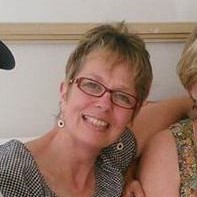
“Stats” or Bridge?

by Jan Johnson


A couple of weeks ago I blogged about my book giveaway drawing… you know, the drawing nobody entered?

Well, I wrote about it partly to tell you where the book ended up, and partly in the interests of full disclosure–I don’t want to give a false impression that I’m some wildly popular, successful blogger or anything. But later I re-read the post and thought it may have sounded a bit… whiny.

I hate whining.

I should write a post, I thought, to emphasize that I’m okay with my small start and am definitely not whining. But I got busy and didn’t write it… yet…

Then I went to the Faith and Culture Writers retreat and conference in Portland, as I described last week. Excellent speakers taught on a wide variety of topics relevant to us creatives. Looking back over my notes, I found one common thread that appeared, one way or other, in every single talk. Here’s the gist of it:

To really connect with your readers you must know your identity and write authentically from your passion. Do not chase market trends or compare yourself to anyone else.

No kidding, this idea popped up in every session, from “Embrace Your Inner Weird” to “Learning from Great Literature” to “Ten Things I Hate About Your Blog.” After hearing it twelve or fifteen times, phrased in a variety of ways, it made quite an impact on me. (I may have mentioned that during the conference I suffered from information overload. Otherwise it might have had that impact sooner.)

I don’t obsess about the number of subscribers my blog has. Besides the “comparison” thing, blog statistics are pretty much meaningless anyway. Many people click “subscribe” if they see one post they kind of like, or if they want to sell me something–and they never come back. One time someone followed my blog, leaving this comment on one of my especially heartfelt, carefully crafted posts:

“Follow back?”

Did she even read any of the post?

That lack of depth or engagement sends a message: “Jan, you are just a commodity this person wants to use.”

A four-digit number of followers would feel good, but only if those individuals benefit from what I have to say. I want to build a bridge between myself and my readers and, hopefully, between us and Christ. So why pump up my statistics with two thousand people who have spent no more than fifteen seconds–ever–with my blog? As near as I can figure, it’s better to connect with two dozen real live people who actually, you know, enjoy some of my posts.

Like Marlece, f’rinstance–mom of four boys in Washington state. She documents the joy and wackiness in her blog “Son Up ‘Til Son Down.” We connected online, and got to meet when I was in the area for the conference. After encouraging each other for a couple of years, I can’t tell you how satisfying it was to see her and deliver a real, live, warm, 3-D hug right there in Starbucks! She writes authentically and from her passion. As we talked I found I already knew her. She is just as wise and wonderful in person as I’d thought.

That’s how I want to write, too. So, if you’ve read this far, know that I truly love sharing my hectic, goofy and often-discombobulated life with you. You are the one I write for, and again I say…

…thanks for reading.
Seriously!
Jan


Connect with Jan:

Website


Stirred and Settled

Riding in Hawaiiby Jan Johnson

 I’d been looking forward to it for months: the Faith & Culture Conference for writers and other creatives. We met last weekend at Warner Pacific College, on the edge of Mt. Tabor in Portland, Oregon.

Brent and I actually flew out to Portland a week early to visit our two sons, their wives and our grandson, all of whom have relocated to the Pacific Northwest in the last year. Good times!

The whole region is gorgeous, hills bursting with plant life including enormous Christmas trees and tons of flowers. The lakes and rivers were full of water, which almost seems weird to a Texan whose state has been in drought mode for, what, four or five years?

The city of Portland thrums with an exuberant, youthful vibe. Artfully dressed people in all their picturesque hipness were everywhere. (Sometimes a middle-aged small-town grandma needed to go look at a blank wall for a minute. I just couldn’t keep up, you know?)
But the pre-conference retreat, and the conference itself… whoa. Fabulous times of worship. We drank deep from a fountain of pure joy. Honest conversations, learning over and over that “I’m not the only one!” Making new friends, some of whose convictions, values or doctrinal beliefs differ from mine.

On the flight home to Dallas I spent some time considering the “Big Takeaway” — What had God said to me overall about my life as a writer and especially as a believer?

I’m glad you asked.

Most importantly, I heard the warning not to mistake my own tradition, paradigm or interpretation for biblically sound doctrine. My belief could be misinformed. My doctrinal position could actually be (gasp!) wrong. Or at least a matter of individual conscience.

On the other hand, depending on the topic and context, my particular belief or conviction could be right. While it’s certainly healthy to question old traditions, it’s equally healthy to question specific ideas generated in a youthful, freestyle, “anti-tradition” paradigm.

After all, we wouldn’t want to throw out the nuggets of holy truth along with the gravel of tradition and personal preference. As Peter points out in 2 Peter 1:20-21, “But know this first of all, that no prophecy of Scripture is a matter of one’s own interpretation, for no prophecy was ever made by an act of human will, but men moved by the Holy Spirit spoke from God.”

Either way, pursuing doctrinal correctness is not enough. I must also make sure my heart, my attitude, are right. I must seek my brothers’ and sisters’ highest good, with humility and love and respect for their sincerity.

I learned tons of stuff about writing, too, but I won’t burden my longsuffering readers with those concepts. Besides, marvelous bits of wisdom kept coming at me… so fast that too many escaped before I could jot them down. So my notebook is a little disjointed.

I’ll sign off for now, with loving greetings from the heart of Texas, y’all.

Thanks for reading,
Jan


Connect with Jan:

Website


When Cracks Show us the Glory of God

Ashley Hales

by Ashley Hales


Shivering in this northwesterly wind, I sit on the edge of dirt and pavement: this juxtaposition between organic and man-made. This concrete worn and utilitarian next to the unadorned simplicity – almost vulgarity – of the dirt. We are stuff just as these. Stones pulverized and fashioned into meaning. Organic material who hide behind makeup and jewelry and our bios. But we’re all just dust and ashes. All here to serve a God so much bigger and more incomprehensible than ourselves. A God who hung the stars in galaxies we haven’t yet discovered; a God who created atoms and molecules and things we can’t comprehend. For what? For the joy of it.

For delight. (That’s what Henry James taught me – the delight in language, in the glory of the small pieces forming intricate beings called sentences that curl and twist and in which we live and move and have our being).

That there is something about glory that fills and moves spaces; that it is self-assured in its perfection because it is perfection that comes from humility, from sacrifice.

For a Kingdom that breaks through these cracks in the sidewalk or speaks to me out of the dirt, is a Kingdom that is not about utility. It is a Kingdom that glories and dignifies the small, that notices the simple – that says a hair or a sparrow are currency in this Kingdom.

In college there was a singer-songwriter who sang a song based on Isaiah 55, “You who have no money, come buy and eat” and it made no sense to me then. This Kingdom where glory comes in brokenness, where glory breaks in through the stuff of dirt and sidewalks, where glory is a free meal.– where glory fills the ordinary with good things – this, this is where I want to live.

It is only here, in this Kingdom of concrete and dirt, where I am fully free. In this moment there is life, life more abundant and full and overflowing than my degrees or accomplishments. And it comes inching towards me as an offering while the thoughts about all those people who I am responsible for, for the pain and heartaches and miscommunications come racing in. But I’ve been given this moment.

It, too, is an offering of dirt and concrete. And it, too, is delight.


Connect with Ashley Hales:

Website | Twitter


What it Looks Like to Find Home (yet again)

Ashley Hales

by Ashley Hales


We almost moved to Portland in 2009 to do an apprenticeship with a church. We fell in love. We wanted to be downtown people. We wanted to walk on lazy Saturday mornings with a cup of hand-crafted coffee and browse in Powell’s. We ached for urbanism, books, meaning, and craft beers. We longed for the coming together of pubs and stories; of the gospel and hipsters; of beauty and brokenness. And then it turned to ashes. We didn’t move. And we felt like death. Six years later, this last weekend, I returned to Portland and even in the span of three days and three nights, I am resurrected.

I am more fully alive, more fully myself, more a member of a tribe than I dreamt possible. There is a quiet back and forth between the prophetic fire I feel stretching for release inside of me and the long, slow soul-digging necessary to make a life of writing work. And it all is good work. Because now I believe I have a community of soul friends; where, hunched over drinks around a table, even though we come from different backgrounds and theological viewpoints, we are home. There, around the table, we are most fully ourselves, most fully alive. Because home was never about being right. Home is belonging. Home is where we hash out who we are and what we believe; but surrounding that process, is a womb of protection. Home is where we can be messy, scared, broken, angry. And a true home can hold us as we thrash about as we are birthed into ourselves.

I found a little slice of home there in the drizzly northwestern rain. I found a home by myself, sandwiched between earth and concrete, feeling as much a part of one as the other. I found home in a Kingdom that is wide and deep and long and a breath of air. I found home in words that filled me, where I marveled at beauty and truth wrapped around one another like lovers. I found home in the eyes of my friends, when I could listen to their hurt, to their cries of lament from systemic oppression; or where I could weep at the violence done to them because they were sacrifices to a system. These are systems based on fear or control, where the image of God becomes something to squelch and squash, like my toddler squishes Play-Doh back into its plastic tin. I found home in the words of meandering faith journeys, where we hold holy space open for each other. I found home in my tears. Portland birthed me. Me. Not in my writerly garb, but just me.

I have some resolutions of sorts, some lessons to take away and tape up to my bathroom mirror, to remind myself what I will do:   I will dig gently. But I will dig. I will tell myself the truth of the middle day. That there is dusk and there is dawn and at these threshold moments we are the verge of beholding glory. I will see. I will pause, slow down and not rush to resolution. My first duty is to see. I will proclaim truth. I will point others to glory. And, I will show them home.


This was Ashley’s first time attending the Faith & Culture Writers Conference. She blogs at: Website

Killing Your Inner Critic (With Kindness)

Pam H by Pam Hogeweide

Click here to read the original post on Pam’s blog. 


“Have you ever prayed for your inner critic?” asked my dear friend Jane. We were sitting in a tree house her husband Tony had built. Not a tree-fort type tree house. But a Tree House, with windows and electricity and an upstairs and downstairs. We were in the upstairs part, built like a small sun porch with evergreen branches pressed against the window panes. A truly serene place and in this place my soul sister Jane had listened to me reveal the pounding I had been taking when it came to my writing. My inner critic had been on a rampage.

Who are you to think you have anything to say? You aren’t educated. You’re writing is too loose. Nobody cares if you write or not. Stop wasting your time. Kill your blog.

I revealed all to Jane who was more than just a friend, but also a sage-woman in my life.

“What if we prayed for your inner critic right now?” asked Jane in her gentle Jane-ness that endears everyone who comes in contact with her.  “Your inner critic is, after all… You. She is a part of you and that part of you needs healing. Why don’t we lay hands on her and pray?”

With our heads bowed down  and Jane’s hands covering my clasped palms, we prayed one after the other for my inner critic who is Me. I felt a river of freedom open up  in the hidden world within. Something had shifted it seemed.

Time would tell, as she always does.

Writers have many stories of contending with their inner critic. I heard of one writer who negotiates with her critic to wait ’til she’s finished up then she can rip into her writing.   Another  writer I met at a conference said she had written a break-up letter to her inner critic and that it really worked. And then there was the writer  who  confessed to murder. “I strangled him dead. Now I write in peace.”

I thought about these different methods for dealing with my inner critic : negotiate? write a letter? murder?

Who ever heard of praying for their inner critic? Leave it to wise, kind-hearted Jane to offer such loving guidance.

Time did tell. It worked. 

Within weeks my writing was flowing. The familiar critical voice was gone. There was silence … much of the time just quietness from the sidelines …  as I got on with the craft of writing one carved paragraph at a time. And then, she spoke again, but this time without unkindliness.

I really like how you’ve used this metaphor. What a great picture to convey that feeling.Your writing is getting stronger. Keep writing. Keep writing. Keep writing.

I began to write and blog with greater boldness and strength. Self-censoring began to fade out. My inner critic had become my inner coach and because of this,  I began to write with feverish liberty.

Within three years of that tree house prayer time, I published one book and began to write another. Once my inner writing critic became my inner writing coach, it was if I became a new writer. I was born again. My writing bones flourished as my writing voice soared.

It seems to me that there were three things that helped transform my inner writing critic to my writing partner:

  • Recognizing that my inner critic is not some disembodied voice out to get me, but she is Me, the fearful, anxious part of me who is scared of failure, rejection, abandonment, and worst of all for writers, a reader’s indifference.  Realizing who my inner critic was made it possible to reach in and love her.
  • Saying it out loud to a trustworthy, non-judgmental person.  Confession is good for the soul, and telling on my inner critic shined the light on a dark corner of my psyche. Reconciling this shadowy part of me meant confronting her … but with kindness rather than banishment!
  • Reconciling with my inner critic by embracing her and affirming her. I need her in my life. She is my hidden self, my inner creative who helps shape my writings. She’s meant well, but all that criticism coming from a place of fear and anxiety was not helpful at all. It tore me down. Building her up displaced criticism and turned her into my ally. My inner self and my outer self are more wholehearted when they (we!) get along.

If I could give new writers one piece of advice it would be this: Make friends with your critic. Don’t ignore them, punish them or threaten them. Instead, kill them with lots and lots of kindness. Your writing will flourish with greater boldness and fluidity without the weight of criticism being heaped upon your writing soul. Make friends with your critic. And Write On.


How to Pitch without Panicking

Chips_MacGregor_500 by Chip MacGregor

When I attend writers conferences, I spend a day or two listening to authors pitch their ideas. All sorts of people will sign up to talk with me, and they’ll have a variety of questions:

  • Will you look at my proposal?
  • Is this salable?
  • What advice do you have for me in my current situation?
  • Which publishing houses might be interested in my story?
  • How could I improve this proposal?”

I never know what I’m going to see or who I’m going to talk with, so I was interested when someone asked me this question: I’m getting ready for a writing conference, and while I think I have some great ideas for books, I find I always panic right before a pitch. I lose my train of thought (and my confidence), and have embarrassed myself more than once with rambling replies to agent & editor questions. What advice would you have for those of us who nerve out at key moments?

Happy to help. Here are my ten keys to pitching an agent at a writing conference:

1. Review your book. I’m assuming you’ve already written your novel, since nobody is really taking on new fiction projects unless they are complete (or, if it’s a nonfiction book you’re working on, you’ve at least written a good chunk of it). So go back and look it over. Remind yourself what it is you want to say about your book. Be ready to give me a quick overview at the start of our conversation  (“This is an inside look at the biggest crime spree in Nevada history, told by the detective who cracked the case” or “I’ve got an edgy suspense novel — 24 meets James Bond” or “Imagine if there was a way you could reduce your chance of getting cancer by 50%, and all it took was a simple change in your breakfast habits?”). In other words, be able to give me something interesting about your book in a sentence or two.

2. Create your script. Write out what you’re going to say about your book, word for word, so that you’re sure you cover all the essential elements in as few words as possible. Some conferences only give you three minutes to do this, though many give you ten minutes — which means you want to get through the book’s description in order to engage the agent or editor in conversation. So give me a quick fly-over of your story. Hit the major plot themes, say something about your lead characters, and reveal why it’s unique. Use specific images in your wording to make it stand out. And have an ending, so it’s clearly time to engage in conversation.

3. Practice your pitch. That is, you’re going to want to sit down with your script, and say it, out loud, as though I was already sitting across the table from you. Don’t skip this part — it’s what will make your pitch better and give you confidence. It’s what will best help you prepare, so you don’t get tongue-tied once we’re actually face to face. (Sure, when you go into the bathroom to practice out loud, your family will think you’ve lost your mind. Don’t worry! When you told them you wanted to be a writer, they already determined you had lost your mind.) I think knowing what you’re going to say and having already practiced it out loud is the single best thing you can do to develop confidence. You don’t really want to sit and read it to me. You want to sit and say it to me, which means you’ll want to go over this enough times that it just feels natural. You may bring your entire script with you to the meeting, or you may just bring an outline with your bullet points. But practice saying it before you sit down and start talking with me.

4. Find the highlights. Think through how you’re going to make your book stand out to an agent who is going to hear 50 pitches at the conference. Maybe you have a great opening line. Perhaps your story is related to today’s news. Maybe you have unique qualifications for writing this book, or a huge platform to support it, or an endorsement from someone fabulous. Include that in your pitch. Don’t oversell the book (I don’t want to hear that this is the best fantasy since The Lord of the Rings), but let me hear something that will make me remember it. As my mentor once said to me, “Don’t tell me your novel is funny — read me a line that makes me laugh.”

5. Research the agents and editors. I don’t represent children’s books or poetry or gift books. Yet I know somebody is bound to make an appointment with me and start by saying, “I’ve got this wonderful gift book of poems for children that I want to tell you about.” (Then, when I explain that this might be a fabulous project, but it’s not going to be a fit for me, they’ll looked hurt and panicked, and they’ll turn in a critical comment about me to the conference director. Sigh…) Look, what I represent is on my website. The books I’ve represented are listed on Publishers Marketplace and Publishers Weekly. I have a blog where I talk about authors and projects. Anyone who can’t figure out what I do and don’t represent simply isn’t trying very hard. So spend some time researching, to make sure you approach the right people.

6. Know what you want. I will often say to writers, “What’s your expectation for this meeting?” Do they want career advice? Do they want to talk about the salability of their story? Do they want to ask questions about creating a better proposal? Knowing what you want from the person you’re meeting is critical. And if it’s simply, “I want to find an agent to represent my work,” then have realistic expectations. You’re not going to get signed by an agent at a conference. (And if you get offered representation by somebody who hasn’t so much as read your work, be aware that you’re about to sign with a bozo.) A more realistic expectation would be, “This agent agreed my story sounds interesting, and he/she is going to go back, read my proposal, and engage me in a conversation of some kind.” This is a business, and you don’t race to say YES to the first guy who expresses random interest in your work. You do your due diligence.

7. Have something with you. I differ from a lot of agents in that I think you’re always best to have a short overview and some sample pages with you at the meeting. You may not get to them, but what if you tell me something and I say, “Holy cow — that sounds amazing! Can you show me some writing?” Publishers aren’t buying ideas, they’re buying writing. So having some with you is a good idea. I realize some conferences will dissuade authors from bringing any writing, since the fact is most of us won’t take pages with us — too bulky for a carry-on, the pages will just get bent, and we really just want to read it on a laptop anyway. Still, I like talking with an author, then having him or her show me the first couple pages of the book. That tends to reveal if this person is actually a writer, or just someone with a cool idea.

8. Look good. You’re meeting with a professional. Dress like one.

9. Be polite. Everybody likes meeting nice, interesting writers who can talk naturally about their books. Nobody likes meeting an arrogant know-it-all. (On more than one occasion I’ve had authors ask me to sign a non-compete before talking. Good grief… I decline, and start looking at my watch.) So have a conversation. Don’t stalk me. Show me you’re a real person. If you’re nervous, take a deep breath and tell me you’re nervous (I’ll say to you, “then forget the speech, and just tell me about the book you wrote”). Editors and agents are simply people working in the industry, the way you work in your field. Most are pretty good at what they do. You really don’t have to fear them, or act like you’re meeting the Royal Family. They are there to talk with you about your writing.

10. Listen to the response you receive.  Don’t be surprised if an editor doesn’t like your idea, or if an agent suggests changes. They could be all wet, but they’re trying to do their job by offering you some experienced perspective. So listen, take the criticism, and reflect later on whether or not you’ll implement their idea. But don’t use your small bit of time to argue. I think my least favorite part of one-on-one meetings is having an author argue with me — not because I’m always right, but because they paid money to come hear what I have to say, and now they want to haggle with me over it. (But, if you’re taking notes, I am always right.)


Chip is a book guy with a long list of credentials.  He’s a published author and popular writers conference speaker. He’s also a literary agent who has secured more than a thousand book deals for authors he has represented. Chip’s blog is regularly on Writers Digest’s list of  “101 Best Websites for Writers.”  Meet him at the 2015 Faith & Culture Writers Conference  Maybe you can even pitch you book to him! But SIGN UP soon as spots are filling up!

Stop hiding from fear of failure

Marc SchelskeBy Marc Alan Schelske

Like you, I’ve got a project I’m supposed to be working on.  I’m supposed to be completing the written content for an online course I’m developing.

Most of the time I’m pretty focused on getting things done. Most of the time. But right now, I’m finding myself infinitely distracted. So many things to do. So many justifications. Social media to build connections for my writing. Another round of research. Reading just one more book full of insights on how I can be a better writer or blogger.

Lots of things to do, but honestly, it’s all just a distraction. I’m feeling enormous pressure and resistance around the one thing I really want to be doing right now. Why?

Because I’m a perfectionist.

I care a great deal about every detail. I want the things that I do to be excellent. Beautiful things inspire people. As an artist, it’s far more interesting for me to engage in crafting something elegant. The world is better when people care about excellence. But there’s something more here, something darker.

Perfectionism is a shield that hides fear of failure.

If something were truly perfect, it couldn’t fail, right? At least that’s our myth. I’ve known incredibly talented musicians who spent years tweaking their songs, rather than releasing them, and writers who will write and re-write and re-write, rather than let another human read their work. Failing to move forward is its own smothering failure.

Anne Lamott named this demon exactly when she wrote these words:

“Perfectionism is the voice of the oppressor, the enemy of the people. It will keep you cramped and insane your whole life… I think perfectionism is based on the obsessive belief that if you run carefully enough, hitting each stepping-stone just right, you won’t have to die. The truth is that you will die anyway and that a lot of people who aren’t even looking at their feet are going to do a whole lot better than you, and have a lot more fun while they’re doing it.”

Stop hiding from failure.

Fear of failure is the real enemy, and perfectionism is its voice. This fear results in paralysis or, in my case, eternal distraction. If the book never comes out, then I’ll never be critiqued on my concept, or my theology, or my writing style, or my font choice, or the hat I’m wearing in my picture. That feels so much safer.

It is safer, but it’s not life.

Steve Jobs is famously credited as saying “Real artists ship.” They do the thing they say they do. They write, or sing, or dance not in their bedroom, but out in the world where it matters.

Maybe you shouldn’t be allowed to call yourself a thing–a writer for instance–until you’ve done it in a place and time where your failure would matter, where others could judge your performance, where you had to push through the fear of being rejected and do the thing you love anyway, out in public where everyone can see.

My heart says, “I will be a writer, if I can just write exceptionally well,” but I don’t think that’s true. The truth is that I am a writer when I push through the fear of rejection and failure and share my writing with you.  After all, we are all just rough drafts.

(Oh, hey! That’s the theme for this year’s conference: Rough Draft: From Blank to Beautiful! Letting go of perfectionism is a big part of that journey.)
————————————
Marc Alan Schelske is the Launch Coordinator and crazy-note-taking secretary for the 2015 Faith & Culture Writers Conference. He loved attending the 2014 event that he came back this year to help! He blogs about intentional spiritual living at Marc Alan Schelske

———

When writing, find your Nancy

Jody CollinsBy Jody Collins

When I began blogging almost 3 years ago I had absolutely no idea what I was doing. Maybe you’ve felt the same way?

I was welcomed by a few new online friends into the High Calling network and encouraged to pursue my passion.  In just three years, God has shown me a few things about the path I’ve chosen, this ‘writing for the world,’ and given me some perspective-makers to keep me focused: 

1. Find Your Nancy

As you’re tapping and typing away at your laptop or desktop computer, there IS no audience, it’s just you and Jesus and your words.  You send them out into the blogosphere and pray for a connection.  You hope they’ll land somewhere, maybe touch a chord and speak to somebody. At least that was my prayer.

Lo and behold, one day I got a comment on a blog post. (Yay! It’s Okay to do a Happy Dance when someone leaves a comment.) Someone actually read what I wrote and told me about it!

It was an encouraging precious word from a woman named Nancy.  And she showed up every week, to read whatever I’d written. In spite of my fears that my words were than less-than-profound, she’d remark on their depth or how encouraged she felt.  Every week since then she has read and commented on my posts.

Now I have a very small crowd of ‘regulars’—fellow writers/bloggers and readers who encourage me as well. But I always remember Nancy—to write just for her—as if she was the only one listening. It personalizes my writing, which makes it more relatable.  It also gives me hope.

2. Choose Your Words

Not everything is a blog post! Like the nurse logs in the Washington Coast rainforest, some things just serve as detritus for new growth.  You know all those sticky notes and backs of envelopes?  Those inspired scribbles from a Sunday morning sermon you wrote on the back of the bulletin?  The scraps of paper you found just in time to scratch a revelation on?  Yeah, you’re probably not going to write all that down…

Not everything gets into print—much of it is practice for the process, part of the pile—a paper detritus that is the growth medium for what you DO write. The Holy Spirit will quicken in you the words that need to see the light of day.  Some of it will serve as markers, sitting in your notebook or under a paperweight, reminding you of how far you’ve come. Just keep writing. Persist, and then choose the honest, compelling words to share.

3. Build Relationships.

I am no professional marketing person to speak to what ‘platform’ is.  I am a believer and a writer and simply offer my words back to God to use as He sees fit.  Looking past all the social media skills and conferences and platform building, I think the core truth is this:  Building your blog (or your writing audience) is all about relationships.  

I am not concerned with numbers or stats, really.  For me, it’s all about connecting. But how can you extend your reach? Widen your audience? By reading other peoples’ words, commenting when you can and having them click back and find you.  That’s how others will find what you have to say.  There are other voices that share your passion and vice versa.  Maybe it’s Patheos, maybe it’s The High Calling, maybe it’s an online magazine—like Ruminate or Relief Journal or of course, where you are at now, the Faith & Culture Writers Connection!

There becomes an overlapping of the circles that you find yourself touching, an ever-expanding Venn diagram of comments and topics and people.  I personally am interested in keeping my reach small so I can go deep, rather than being wide and therefore shallow.  You’ll find what feels right for you. But wide or deep, it’s all just relationship connections.

As you write keep these three things in mind.  Find your Nancy and write for her. Choose your words and persist. Build relationships. Do this consistently and you will see your writing and creativity move forward and impact people you never thought possible.
——————————-

Jody is the Volunteer Coordinator and Administrative Assistant for the Faith & Culture Writers Conference.  She blogs at threewaylight.blogspot.com.

God, gender and the use of pronouns

Tony KrizBy Tony Kriz 

Today on “Off The Highway,” The Shack and Cross Roads author, William Paul Young (whom we just announced is a featured Faith & Culture Writers Conference speaker), addresses an issue for which he is, uniquely, both a lightning rod and a thoughtful scholar.  In The Shack, Paul famously embodies God the Father, “Papa,” as an African-American woman and the Spirit as a wispy Asian woman.

I want to focus today’s post on an implication of Paul’s theology… a very practical implication for me in my vocation.

As a writer on topics of faith and spirituality, God is often the subject of my writings.  At this point in my writing development, one issue that I am working through is the use of God-pronouns in my writings.

To put it simply, do I refer to God as exclusively “he” or do I mix in both “he” and “she” references.  Straight talk.

Paul Young, mixes his references. For instance, he most typically refers to the Spirit as “she” since the Hebrew word for Spirit is grammatically a feminine word.

I had an article published earlier this week on a national website.  As happens, minor edits were made by the editors.  A punctuation correction here, a phrase added there.

In this article, the editors changed the word “God” to “he” at several points.

Look, I get it.  From the traditional editorial model, I use the word “God” too often, sometimes multiple times in one sentence.  I say “Godself” instead of “himself”.  My motivation is to avoid the gender question as often as possible.

Here’s the deal:  I would probably prefer to weave in both “he” and “she” in reference to God.  I believe that this would be more ontologically true of God’s character, even though it would be a shock to my religious-literary tradition.  However, I know that because of that shock, many, many people from my traditions would be offended by references to God as “she.”

On the other hand, referring to God as “he,” particularly if it is exclusively as “he” is also offensive to a significant group of people that I very much care for, a group that has often experienced indefensible abuse at the hand of males.  I want to write as inoffensively as possible.  I desire to be heard.

So what am I left with?  I can either risk offending (thus losing my message) a fairly large group by using “she” AND “he” for God OR offend another group of people (for whom the offense is often much more visceral) by sticking strictly with “he.”

My solution.  Since we don’t have an all encompassing or “neutral” pronoun in English, I try to avoid pronouns for God as much as possible.  Even if it makes my writing slightly more wooden.  If you read my most recent book ALOOF, you may even notice that from the start of the book to the end, my use of God-pronouns decreases along the way.

And why not?  Even if it is wooden, this is God we are talking about.  Throughout human history there has been a special deference to the names of God.  Scribes would use a different quill when writing a word for God.  Orators use unique and specific phrasing when speaking God’s name(s) aloud.  Why not also remove the use of pronouns, at least in English, so that whenever God is referenced the full gender-spectrum is always embodied in each use.

What do you think?

On the other hand, I am also playing with the idea of using the pronoun “they” for God, instead of “he” or “she.”  It removes the gender dilemma.  And it was God who referred to Godself saying “Let US create humankind in OUR image… Let US create them male and female.”  Maybe a transition to “they” could provide a lovely solution.  Also, it would be fun to watch auto-grammar-correct deal with a sentence like: “When God speaks to people, They tend to do so in a way that surprises.”

[Watch today’s episode to hear more of William Paul Young’s thoughts on the topic.]


Tony Kriz (D. Min.) is an author/teacher of faith and culture through media and at universities, conferences and communities of faith, and returns as one of our speakers at this year’s Faith & Culture Writers Conference,  for which he serves on the Advisory Board. He has taught in the spheres of Intercultural Studies and Spiritual Formation at Multnomah University and Warner Pacific, among others.  In addition to his recent book Aloof, he’s the author of  Neighbors and Wise Men: Sacred Encounters in a Portland Pub and Other Unexpected Places(Thomas Nelson, 2012).

Many were first introduced to this unique thinker under the name “Tony the Beat Poet” through Donald Miller’s book, Blue Like Jazz. Tony has served in places as diverse as the Muslim world and Reed College. Tony lives with his family in North Portland in an imbedded, intentional community.

Website: www.tonykriz.com | Twitter: @tonykriz

Don’t Miss the Journey Because of Your Formula

Bob Welch     By Bob Welch

I write books as if it were a game of Yahtzee and the goal were to see if you can fill in all the required blanks.
Has that made me rich? Nope.

Has it made me happy? Yep.

They say if you want to make money in the writing business you find a niche and go to that place again and again.  In other words, if the crowd loved your trumpet solo don’t come back on stage with a guitar or xylophone.  Play that trumpet, baby!

I get that. And I don’t begrudge any writer who subscribes to that theory. To each his or her own.

But here’s to those who’ve gone the other way, who’ve followed their muses, wherever those muses have taken them, even if it’s seldom meant to the bank to deposit another hefty royalty check.

Here’s to those who’ve led with their hearts and not some can’t-lose formula.

Here’s to those who’ve written as if life were a Yahtzee game and part of the fun was seeing if you could score a few points in all 12 categories: perhaps writing a three-of-a kind spiritual trilogy, a full-house family memoir, and a small straight of mysteries.

Here’s to dabblers and chance-takers and you-never-know-unless-you-try writers whose platforms aren’t chiseled precisely in granite but whose success is built of great memories.

I can relate. I am a Yahtzee writer.

World War II biographies? Three. Sports and life books? Two. Children’s? A couple with a third on the way.  Nuggets of wisdom from my favorite movies and plays? Check. Collections of newspaper columns? Check. Hiking the Oregon portion of the Pacific Crest Trail? Check.

The price I’ve paid? I’ve never gotten deep traction as an expert in any particular genre. The dividends I’ve received? Being true to who I am as a person.

I’m not touting the likes of Yahtzee writers for any sense of self-grandiosity; follow-their-muse types often find themselves being regularly humbled, my most recent example being a book event at a fire station to which three people showed up — one by accident — and firetruck sirens kept going off while I spoke.

No, this isn’t about chest-beating success. This is about the significance of the writing journey itself.

Too many writers drink the formulaic Kool-Aid suggesting you must trust a system and not your heart. And, turning 60 this week, I’ve been more contemplative than usual about how I’ve spent my life as a writer and whether going my own way has left me a failure.

My conclusion? I wouldn’t have missed the ride for the world.

By following my muse, I’ve gotten to write about the stuff that I’m passionate about — and best-suited to write about. To know an array of fascinating — and generally obscure — people. And to experience a bunch of stuff I never would have otherwise.

Because of my book research and promotion, I’ve put on a barbecue for a town of 600 people, shot hoops in the Indiana gym depicting Hickory High in the movie “Hoosiers,” spent a weekend at the Wonderful Life Festival in Seneca Falls, N.Y. and found myself in Normandy, France, on 9-11.

Along the way, I’ve met a few famous people but, ironically, the two most well known “stars” I’ve spent time with were also the only two books subjects I’ve parted ways with — because they were so unwilling to help.

Finding success in book writing is about perspective and appreciating the small victories you experience by being yourself.  It’s about the grist of the journey, not the fruits of whatever material success you experience. And about being true to your bent as a God-created human being. I think of a line from an old Amy Grant song: “All I ever have to be is what You’ve made me.”

So, sure, if you’re made that way, play another trumpet solo. But if you’re not, don’t be afraid to play Yahtzee.


Bob Welch is a columnist, speaker, author and writers workshop leader. He’s a newspaper writer and the author of 18 books, He’s been called “the most eclectic writer in America”, having written everything from children’s books to hiking the Oregon portion of the Pacific Crest Trail to faith-based offerings. His latest book is 52 Little Lessons from Les Miserables (Thomas Nelson). Learn more about Bob at BobWelch.net, or meet him at the 2015 Faith & Culture Writers Conference, where he’ll be a presenter.