A challenging, bridge-building weekend

Meet Kara By Kara Chupp

Last night we watched the Count of Monte Cristo.

My friend Anne-Marie just finished the book and throughout she noted all the ways the movie does not match, which were vaguely familiar from the last-long-time-ago that I read it.
And she said all the names with perfect French pronunciation which made her version sound way more beautiful.

But I was tired.
And kind of enjoyed that Mondego is clearly the bad guy. No redeeming qualities there.
And Dantes gets to marry Mercedes– who only marries Mondego because she is expecting Dantes’ child and thinks he is dead.
And Dantes’ sidekick feels like a character out of Princess Bride.
And at the end Dantes kills Mondego after first offering him mercy, but Mondego is clearly SO bad that you’re relieved.

But, as we were discussing afterwards, there is a depth in the book, that is lost in the movie.
There are fewer consequences.
Less realization and redemption.
A true loss that results from choosing simplicity over complexity.
Beauty and power are diminished in the attempt to, as Ashley Larkin would say, put a “pretty bow on pain.”

This was entirely missing–

“…pray now and then for a man who, like Satan, believed himself for an instant to be equal to God, but who realized in all humility that supreme power and wisdom are in the hands of God alone…Until the day when God shall deign to reveal the future to man, all human wisdom is summed up in these two words,– Wait and hope.” ~Dumas

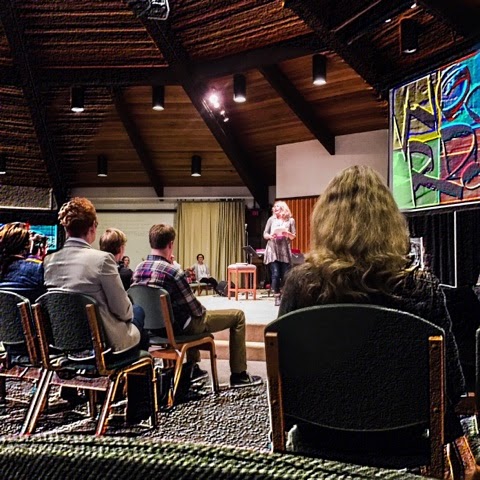
This weekend I went to the The Faith & Culture Writers Conference. It was a place of complexity for me.

A place of realization and redemption.
An experience that was not always comfortable, but that was beautiful.

On Friday, in one writing session, Seth Haines asked us to write down several writers we admire and then to share what is it about their voice that draws us to them.
I wrote down several, but one of mine was Lore Ferguson.

And it’s because I see her as a bridge builder.
I am in a writing group with her and I know what she believes.
She doesn’t waiver on the convictions that God cements in her heart through His Word and the Holy Spirit, but she engages in dialogue and friendship and relationship with those who may be on the other side of the precipice.

And this weekend was one of bridge-building for me.

My favorite session was one with Terry Glaspey where he shared about “writing that endures” and I was struck by how many of his descriptors also depict relationships that endure…

Writing that endures:

— reveals the writer to be a fellow struggler.  We are drawn to those who show that they struggle alongside us.
— takes a risk.
— has the power of empathy.  It has the ability to feel what others feel.
— loves its characters as God loves them. Without that love,  they will just be chess pieces. If they are loved, they will breathe.
— connects with people’s needs, both practical and perceived.
— focuses on questions that are relevant to every person of every age.
— may not be immediately recognized.
— is validated by simply obedience in responding to God’s call.

As I’ve invited other writers to the conference in the past, I’ve added the qualifier-disclaimer–

“Just know it’s a little edgy. Their faith umbrella is a big one.”

In part, those words came from a place of fear.
Fear of a diluted gospel.
Fear of fingers being pried open on issues that I want to hold tightly.

But it also came from just that “awkward middle school fear” that rises when you’re not sure which lunch table you’re going to sit at or whether or not you’re going to be invited to the slumber party.

I sat next to a fellow writer in one of the sessions who I really enjoyed.  I just appreciated talking with her and felt a sense of connection. As she shared about her life and experiences, I started caring about her.  And then after the conference I went and read some of her writing and found that on many issues–we very much disagree.

But instead of feeling anxious, I felt hopeful.
Because a bridge to dialogue was built and without relationship, without love, even Truth can be a clanging gong, a noisy symbol.

And as Kari Patterson shared, “We tell the truth for a redemptive purpose.”
And as  Terry Glaspey mentioned, “The story is the way we argue heart to heart.”
And as Emily Freeman encouraged, “Art that leaves an impression is not the bossy kind.”
And as Seth Haines reminded, “Writing changes the hearts and minds of the people.”
Because as Ray Family proclaimed–

“The artist is the window washer…”

The window washer, in God’s grace and power, is the one who clears away the mud that mars our vision– the pre-conceived notions, the stereotypes, the misunderstandings, that block us from really seeing one another and really communicating our message– and His message.

When “In Christ Alone” echoed off the walls, filling the room with hundreds of voices, all flowing from individuals made in the likeness, and in the love, of our Heavenly Father, the words were grounding and solid.

For me, this weekend at the Faith & Culture Writer’s Conference was full of God’s kindness and His good gifts. Within the first few minutes on Friday, He brought along a kindred spirit.

There was a whole lot of culture— honing writing skills, learning from others, learning about others, appreciating powerful words and art and music.  It wasn’t the simplistic movie Monte Cristo, it was the novel,  full of complexity and complication and recognized layers. Not easy for me to box up with a bow, but so very beautiful.

There was also much faith— risk taken, bridges built, trust established and Christ proclaimed as Lord and Savior.

I hadn’t planned to share this, but I want to.
The article I submitted to the conference writing contest was chosen as the Non-fiction winner.  It was not something I’d expected and I sent it in watermarked with doubt. While I don’t want to need outside validation when it comes to writing, God knows me and that sometimes I do need some dew on the  fleece.  It was such an over and above gift from Him. I’ll tell you why…

Emily Freeman nudged us to write from our Tuesdays.  Our normal days.  The ones that are filled with our normal people and our humdrum dailies– the mounds of laundry, overflowing kitchen trash bags, and counters blobbed with toothpaste.

I went to the conference with a nagging sense of– I am a Tuesday.
And most of these people are Friday nights.

And my essay was a Tuesday piece.
Because I am often a Tuesday writer.

Winning the writing contest was a welcoming of my Tuesday-ness.
An encouraging hug from a community that I wasn’t sure would-could embrace who I am as a writer.
And really, it was just a reminder that we all have (and are) Tuesdays.

As it is with writing that endures, we are all revealed to be fellow strugglers, breathing characters loved by God, who wrestle with questions that are relevant to all, as we meet the needs of others and strive for empathy. Our identity and validation is in relationship with Christ and in the simple obedience of responding to God’s call.

I am so thankful.
And Lord willing, I will be there next year in all my Tuesday attire.

Thank you to all who dreamed, planned, and brought the conference to fruition and thank you for joining me in this space…

P.S. I didn’t quote one of my favorite speakers– Tony Kriz. I was so caught up in his storytelling that I didn’t take any notes. I’m not sure how to say this poetically, so I’m just going to say it.  I knew Tony back in college, when he didn’t have a beard.  But we never really had a friendship.  In fact, to me, it felt a bit more like a– disconnectship. It has been 18 years since then and God has changed and grown us both.  I didn’t know (or take the time to understand) who he is now. In fact, I made assumptions at a distance through a muddy window.  But, hearing from him was one of my favorite parts of the weekend.  A bridge was built.  He had to leave early and suddenly because of a family emergency and I am praying (and will be) that he and his family will sense God’s deep love surrounding them. I was so thankful to hear his story and I am still picturing the Easter candles trickling down from the mountain into the little Albanian villages below.

—————————

Kara Chupp won the non-fiction category of the Faith & Culture Writing Contest sponsored by the 2015 Faith & Culture Writers conference. Find her work at: Kara Chupp
They’re my people because they’re “Jesus people” – and they write

By  Chara Donahue

In my stocking this past Christmas was a gift from my husband. A small little piece of torn notebook paper with  “one writer’s weekend” scrawled across it.  My husband had asked me what I wanted, and I told him a weekend of quiet to focus on writing. He gave the okay with that little corner of  paper. The beginning of the year was crazy: I was in school again working towards a History endorsement, and Biblical Counseling certification, leading Outward’s  women’s ministry, starting a blog, and trying to maintain sanity at home raising my four little rascals.

Fast forward two months, and across my newly opened twitter feed I saw that Kari Patterson  would be speaking at a writers conference in Portland.  Being that she was the first (non-relative) writer  to read  a very small piece of my someday book, It drew my attention. I clicked on the link and  managed to scrape together the funds. My Christmas present arrived in April in the form of the Faith and Culture Writers’ Conference.

I was a bit excited:

Going into this, I knew I was going to have to stop hiding from the fact that I am a writer. Pretending that this piece of me is a dirty little secret of pages needing to stay under a mattress wouldn’t do. It was time to embrace it as part of how God has scripted my part in his story. It was also time to be amongst others who know what it is to write.  Those who simply want to serve the world by weaving together letters that create beautiful words and words that create lasting stories.

All this seemed big but not necessarily scary.  I mean, what risk was there?   I know how to wear big girl pants.  Yet, emotionally I heard whispers of peril and intimidation, because I love writing and this was my first real proclamation of that. I was putting something I love out on the offering plate and I had no idea if it would be received.  Nevertheless, I was going and I would call myself a writer.

I longed to enter into a retreat where I was able to talk about writing and not have the fear of appearing prideful, because the people there would understand I don’t write out of pride or self-elevating desires. I write to process, to expose hidden glories, and to seek out the truest truths.   I don’t write because I know it all. I write because I have something to say.  That in a world of billions of voices, I want mine to make people ask, “Who is this Jesus?”

So to Portland I went. While I drove to the land of exotic food carts, the weird, and an airport carpet that’s got a platform 10 times the size of mine, I asked God “What are you going to do? I am listening. How are You going to challenge me? How do You want me to love people?”

The challenges came in many forms:

Can I go from Blank to Beautiful?

Can I–wash windows so that others can see God’s beauty more clearly? — @sethhaines

Can I– point people at God and change hearts with my words?– @NishWeiseth

Can I–remember It ‘s not about my greatness it’s about God’s?– @AshleyMLarkin

Can I–bleed out onto the page in incredible ways?– @karipatterson

Can I–learn “how to market without selling my soul?” — @kurtbubna

Can I–just follow the advice of @karenzach, by never going to a cold computer and telling that nagging inner editor to “shut up” as I write fictional accounts of Kenyan boys choosing their paths?

Can I–like @CorneliSeigneur , “Ask God to show me why He saved me?”  or create space to build up, honor, and encourage others while living Isaiah 50:4?

Can I–tell stories that create beautiful images that people will never forget like @tonykriz and his  Albanian lights?

Can I–search for reason in unreasonable space?– @phievalon

Can I–read the headlines of my soul  from a bench on a Tuesday as tears hug my eyeballs?– @emilypfreeman

Can I–just show up and  be willing to tell the painful, shameful stories so that others can find life?– @RomalTune

Can I–strain my best and truest stories through glory and trust my Lord with the results? — @AliaJoyH

Can I–be in my heart and not my head and get out of the way so that what I am trying to convey can break through? —@christaljenkins

Can I–write a crystal clear book proposal?– @MacGregorLit

Can I–remember rightly and craft beauty out of the pain Jesus has healed me from?– @ChapinChick

Can I–step out of the box God is willing to climb into in order to be with me, and reach for Him instead?– @wmpaulyoung

Can I accept the challenges, and love the people?

I loved the inspiration and the information, but the people…the people at this thing brought the joy.

When I have the deepest truths written and interwoven into my very being, I can risk loving others freely and sincerely from the heart.

I could tell my unedited ideas to a room full of other writers because like everything else in my life my writing belongs to God – NOT to me. I could sit with them, be motivated, and as I nodded along with truths from the speakers, I could join the cacophony of Yays and Amens coming from those around me.  I could genuinely be more interested in their stories than in telling my own, because all insecurities, hang-ups, and self protective measures become small when God is big; and this God of ours is BIG.

I felt accepted by people who invited me to sit at their tables, ask about their lives, and talk about writing in the ways that only writers do. Faces I had only met once became faces of familiarity that made all the other unknown faces a little less alien.  They too want tales to be told, so that faith, hope, and love can seep into  the world as we place words on alters of paper, web pages, and open air. They know writing is not an exclusive club. It is a desire that drives, and that is why I feel a kinship with them – “my tribe.”

But really, they are not my people in the closest sense of the word.  My husband, my children, my church – those are the people that were still there Sunday morning when the conference was over.  I love my daily people, still there, still my favorite humans offering rest when I come down from that conference high and face reality and responsibilities that reach outside of my writing bubble.  But my writing people have been grafted into my awareness.

These fellow writers are still there in my mind, so I can be reminded that there are people out in the world that would understand my blank expression when other more familiar people ask me why the dishes are pouring out of the sink and the kids are still in pajamas,  and I say sheepishly, “Um, I was writing?”

I may only see them on Twitter (which I am loving by the way); hopefully, I will see some of them next year. Reality tells me I may never see some of these people again–at least on this side of heaven. I know it might sound trite, but truth is I am okay with that. That’s life. I am so pleased and filled by those, “Hey, it was nice to meet you once before heaven, see you when we get there” kind of interactions, because they are hopeful  glimpses of eternal community.

This is what I love the most. That these people were my people before I knew them because of Who they know. They are my people because we have the same Ultimate Person. We have Jesus. So yes, these people are my people in that they understand a facet of me that some of my close people just don’t get.

Ultimately, though, these people are not my people because they are writers. These people are my people because they are Jesus’ people. But, it sure is nice that they write.

“That I may know how to sustain with a word him who is weary”.–Isaiah 50:4 (Cornelia Seigneur, keynote speech)

——————-

Chara Donahue attended the 2015 Faith & Culture Writers Conference for the first time, and blogs at Chara Donahue

Reflecting on Blank to Beautiful

dawn_profileBy Dawn Klinge

And I am sure of this, that he who began a good work in you will bring it to completion at the day of Jesus Christ.  -Philippians 1:6

Facing the computer, blank screen in front of me, silently, I will the words to come forth.  Nothing happens until my fingers hit the keyboard.  Even then, with that first tap, tap, on the keys, I have little idea of where these words are going. I only know that I want to create something beautiful.  I must start somewhere.  God help me, I pray.

  The words sound clumsy.  They aren’t beautiful.  Keep going, He says.  I look around at other pages, reading other people’s words.  They’re beautiful.  I want to write like them.  I delete my words, ashamed.

///

  Facing the cross, crucified Jesus in front of me, silently, I will the words to come forth.  I’m sorry, I say.  Please forgive me.  Even then, with that first heartfelt prayer, I have little idea where this life is going.  I only know that he’s beautiful and I love him.  He’s on that cross because of me, because he loves me.  I must start somewhere.  God help me, I pray.

  I’m a mess.  I keep doing things to hurt the One I love.  Keep going, He says.  I look around at other people’s lives.  I think they’re beautiful.  I want to be like them.  I take my eyes off Jesus, ashamed.

///

  I start again.  Tap, tap, tap on the keyboard, the words coming faster now.  God help me, I pray.   I’m scared but I keep going.  I don’t know if I have anything to say that people will want to read.  I want them to think my words are beautiful.  He helps me anyway.  My words are rough, but I put them out there for others to read.   And then I want to take them back.  I want to hide.  But they’re out there now, and I can’t take them back.  My words are still not beautiful, but I ask God to use them anyway.

///

  I’m still a mess, but I turn my eyes back to Jesus.  He’s no longer on the cross.  Now he lives and I have hope.  I still sin against the One I love, but God sees me as beautiful, because of what Jesus did for me.  I keep going.  I want others to see the beauty of God in my life.  I feel their eyes on me as I stumble.  I want to hide.  But I pray that God will use me anyway.

///

 I continue to face the computer.  Tap, tap, words fill up the screen.  God help me, I pray, because I want my words to point to Him, who’s beautiful in every way.  Keep going, he says.

///

 I continue to face the cross.  My beautiful Jesus reminds me that I don’t need to hide.  When I stumble, I just remember that he already took care of it.  I want others to see my Savior.  He tells me to keep going, and I continue to ask for his help.  I see a little more clearly where my life is going now.  One day, my rough draft will be done, and it will be beautiful, because the author and finisher of my faith will use it for his glory.

Looking unto Jesus the author and finisher of our faith; who for the joy that was set before him endured the cross, despising the shame, and is set down at the right hand of the throne of God.  -Hebrews 12:2

——————————————–

Dawn Klinge attended the 2015 Faith & Culture Writers Conference. This essay was inspired by the theme of the conference, Rough Draft: From Blank to Beautiful. Find Dawn’s work at Dawn Klinge.

Not the usual suspects

Romal Tune By Romal Tune

So where do I begin?

If I had to some up the 2015 Faith & Culture Writers Conference in one word it would be “refreshing.”

I’m on the road three weeks a month each year speaking or teaching at conferences or other venues.

But this conference felt different. It was more like a retreat. The positive energy, encouraging conversations, the inspiring workshops and the great speakers made me feel at peace.

More than that, it was a reminder that I am not alone and that my voice is valued.

Faith & Culture 2015 was refreshing and replenishing, which is important because life can be a bit challenging at times and we need places where people help us recharge.                  It’s good to know that there is a conference of authors and writers who are willing to share their journeys and stories in ways that are uplifting.

That’s a big deal.

Maybe like me, you have been in somewhat similar settings where there are these passive aggressive competitions between people trying to prove they are better, more important, or attempt to lure you into the comparison trap to make you feel like you’re just not good enough yet. I didn’t sense a hint of that at Faith & Culture, and that was refreshing.

I came across the event on Twitter; and after we followed one another, I checked out their website.

The first thing that struck me was that fact that the list of speakers did not have what I call “the usual suspects” of speakers.

A lot of conferences tend to keep the same speakers in rotation, and after a while that gets a little boring and predictable. I often hear people talking about how there needs to be more new voices included at conferences but I’ve not seen very many actually include new voices.

But, the Faith & Culture Writers Conference was different.

They purposefully inviting new voices to the conversation around faith, culture and the arts. And this was evidenced in the line up of speakers – there were a lot of new voices and very few, if any, “usual suspects.” After all, they even invited me to be a keynote speaker and co-facilitate a workshop without previously hearing me. The leadership took the recommendation of a mutual friend and decided to add another new voice.

I did two large group talks where I shared my story. The point of the both talks was to show that within our personal stories, as messy as they can be at times; God can turn a mess into a miracle. A miracle that if shared through our testimonies, can save and change the lives of others who are wondering if there is anyone who can relate to what they are going through, and can show them that life gets better.  As a writer our personal narratives impact who we believe we can become in the world.

Revisiting the stories we have been telling ourselves impacts the stories we are able to share through our writing. We are free from pain, shame, and judgment; we are free to be bold, courageous and creative. In a sense, we go from blank to beautiful, the theme of the conference.

A final thought. The plenary sessions felt like church, or should I say what I wish church should feel like. The music was great; the speakers were empowering, practical and relevant. But more than that, there was no pretense, no judging, no shaming. There was just great fellowship, a desire to meet new people, cultivate new friendships and help each other pursue purpose and passion through writing. I couldn’t help but think to myself; wow this is kind of what I wish church felt like.

Thanks to all who attended the 2015 Faith & Culture Writers Conference.                                 My heart felt gratitude to the leadership team for inviting me to be a part of the amazing experience.

———————————

Romal Tune was one of the speakers at the 2015 Faith & Culture Writers Conference. He’s an ordained minister, an author, and a speaker. Find his writing and work at Romal Tune

The 2015 Risk was worth it

Cornelia Becker Seigneur  By Cornelia Becker Seigneur

What an amazing experience at our Faith & Culture Writers Conference this past weekend! I am exhausted and over-did it and felt it at night. I needed to rest more during the days. I will pay later for it later. But, I am so grateful to be alive (truly!)  And, that I can smile thinking about the weekend. An exhausted smile, but a smile nonetheless.

This year, we tried something new, adding an extra experience Pre-Conference during the day on Friday that we titled “Breathing Space- A Mini-Retreat.” That is always a risk, trying something new and different. What if it flops. What if numbers are really low and it looks like a failure. And, when registration numbers were not coming in as quickly as we had anticipated, I’m not going to lie, I was worried. As the conference director, I see the reality of the finances.

Adding the Mini-Retreat and new art spaces and live art were in response to comments from last year’s survey, saying people wanted more down time, more small group interaction, additional opportunities for fellowship. In short, people wanted to not feel so rushed.  And, when one mini-retreat group leader, Nish Weiseth, had to drop out of the afternoon time frame due to a family situation just a week before the event, I started doubting even more. Maybe, this added day was a bad idea.

Then, I prayed and asked others on our lead team to pray.

Our team’s executive administrator, Bethany Jackson, encouraged me to take the group and I appreciated her vote of confidence. But, I really needed to be careful not doing so much since my accident. I was already slated to share from the main stage about my accident, so I just decided to say no to leading this small group. It was hard to say no, as I love leading small writing groups, but I knew it would already be a grueling weekend. I reached out to a few people to see if they could possibly lead that small breakout group for that portion of the mini-retreat. Karen Zacharias Spear and Micah J. Murray stepped in, joining Seth Haines and Brooke Perry, and Romal Tune and Tony Kriz.

God is good. He always provides just whom he needs.

Then came the conference, and people told me how amazing they felt that the mini-retreat experience was. One person said:

“Okay, we can go home now. I’m filled up.”

Others said that God was working on their souls and in their hearts and they were being healed and restored and I am hearing all of these comments and this was only during the “pre-conference,” and I am already shedding tears of joy. Exhausted tears of joy.

Sometimes, when you risk, it flops. Sometimes it goes well. Sometimes it’s in between. But all the time it’s worth it.

The Lord was so in this weekend, and we truly could not have done it without Him. And, that is a good place to be.

That comment I heard over and over again. That God was at work.

It was God, working through my incredible leadership team and committee members and behind the scene folks that made this past weekend possible. I am humbly grateful for their service and friendship. After my accident, they just kept on moving forward. We only had three months to go. We should not have had a conference, but God had other plans.

So many folks worked behind the scenes to make this event go so smoothly. And, these wonderful people were doing more than just running a conference. They were giving their lives. Many took note of the personal nature of our conference. Bob Welch, one of our speakers, said, “Wow,  a few weeks before the conference, I received a hand-written note saying you were praying for me!” I’ve never had that before. We wanted to be intentional about making people feel like they mattered.

We serve a creative God who carved something beautiful out of nothing; and now He calls us to create, to fill the blank pages of our lives with our WORDS, our stories, His Story. We prayed that people would find a place of community and belonging; and, from listening to the conversations, both at the pre-conference, “Breathing Space: A Mini-Retreat,” and throughout the weekend, I think that was happening.

So, we risked, we dared, we dreamed.

And, it was worth it.

——————-

Cornelia Becker Seigneur was is the mom of five children between the ages of 12 and 25, with a set of identical twins in the mix; she has been married to her college sweetheart for 28 years. Cornelia loves gathering people together into community and she is honored to serve as  the founding director of the Faith & Culture Writers Conference.  Cornelia longs to serve Christ in any way she can; she thrives on adventure and the extraordinary ordinary and family; and she needs a lot of grace to survive. Find her work at Cornelia Becker Seigneur’s Website


The Funeral Arranger – 2015 Writing Contest Runner Up

heidibethsadler.jpg By Heidi Beth Sadler

The group of mourners who had gathered around the burial site that morning suspiciously eyed one another. Unlike typical mourners, these four strangers showed no signs of grief. The only sorrowful member of the party appeared to be the yellow lab. Albert—that was the dog’s given name—was casually leashed to a nearby tree. He rested his head on his paws and quietly whimpered.

It was unfortunate for Albert that Sam Prescott hated dogs. Big dogs, little dogs. He disliked all animals, for that matter. Even on this sad occasion, Sam had no sympathy for the distraught creature in front of him.

Finishing the smoldering butt of a cheap cigarette, Sam flicked it much too close to the dog for Bridget Foster. As much as Sam despised animals, Bridget loved them. With an indignant glare, she promptly extinguished the cigarette with her foot and tossed it away from Albert. Squatting down on her thick thighs, Bridget rubbed the dog’s drooping ears, and for a moment, Albert forgot his grief.

Sam rolled his eyes at Bridget and checked his watch. The invitation had said the service started at ten. By now, it was a quarter past, and with no sign of the minister, Sam was irritated. Not that he had anywhere to be, of course, but he was irritated, nonetheless.

Elsa Hernandez, who was desperately trying to quit smoking, raised an eyebrow as Sam lit another cigarette. Even in her chain-smoking days, she had enough sense to know you didn’t smoke at a grave site. Catching a whiff of the scent, she shoved another piece of nicotine gum in her mouth and ferociously chomped.

As the east wind cut through Elsa’s leather jacket, she pulled it tighter. Being such a thin girl, she was always cold, and yet she never quite thought to bundle up. The heels of her stilettos stuck in the wet grass, and she chided herself for wearing them. Like Sam, she, too, was watching the clock; a co-worker was covering for her, and she was anxious to get back.

Felix Carson was the final member of the little gathering. Felix faced the constant challenge of observing people without staring. He often found himself lingering for too long on a particular subject; when caught staring, he would quickly look away and feign interest in something else.

While the dog and the other three characters did intrigue him, Felix was more interested in the clandestine nature of the event in general. An invitation via courier, a red wax seal, no return address. This was the stuff of great literature and film, the kind of story he longed to write but didn’t.

When the invitation had arrived, Felix had carefully opened the envelope with a butter knife. Over the past week, he had read the hand-written contents a hundred times: “Your presence is requested at the passing of a close companion.”

This message, along with the time and location, had been the only information provided to the invitees. Like the others, Felix had debated his attendance. Curiosity, however, had worked its magic and drawn all of them there that morning.

As they waited, it was Elsa’s nervous confession that relaxed the other three. “Excuse me, but could someone tell me who died? I was told a friend was being buried here today, but I’m not sure who it is.”

“Did you get one of those strange invitations?” Felix asked. The others nodded and recounted the same story.

“If this is some kind of a joke, somebody’s in for it,” Sam threatened. He wasn’t quite sure what they were in for, but he would certainly think of something.

“Do you know how long this is going to take?” Bridget asked. She had overslept and only had enough time to gobble down a muffin. She was ready for something more substantial to eat.

A gentle yip from Albert interrupted the mourners’ conversation. The dog stood up and looked to the bottom of the hill. They noted a tall, balding man casually walking in their direction. It wasn’t that he appeared incapable of moving faster; he genuinely seemed like the type who was never in much of a hurry.

“It’s about time,” Sam muttered under his breath and assumed this was the minister. He finished off his cigarette and vowed to abstain until the service was over.

As the balding man arrived, Albert licked his lips. The man produced a dog treat and quietly unleashed him. Without hesitation, Albert faithfully moved to stand by his side, and the whimpering ceased. After caring for the dog, the man turned his attention to the group. His lips silently counted to four, and he nodded, pleased.

“It seems we’re all here,” he informed them and retrieved a tan piece of paper from his pocket. Felix noted that this was the same type of paper on which his invitation had been written. The man cleared his throat and closed his eyes. This signaled the others to follow suit. Sam, who was adamantly non-religious, expected a prayer and refused to close his eyes.

After several minutes of awkward silence, the others slowly opened their eyes. It was unclear if he was meditating or had fallen asleep standing up. They shrugged at one another and waited for some type of instruction. Eventually, the man opened his eyes and and began to read.

“Ladies and gentlemen, it’s not how you begin your life. It’s how you finish it.” After this proclamation, he motioned for them to move in closer, which they begrudgingly did. “That’s better. Now for the introductions.”

The strangers exchanged a confused look with one another. None of them could recall a funeral with introductions.

“Let’s start with Mr. Carson,” the balding man said and directed them to Felix. All eyes turned to the surprised man, who was suddenly uncomfortable by this scrutiny.

“Me?” Felix coughed out.

“You are Felix Carson?” the man asked and referred to his notes.

Felix nodded and kicked at the ground.

“Very well, then. Felix Carson, you are a computer programmer who sits at home in his parents’ basement. You dream up stories that you never actually write. Fear of failure keeps you from ever trying to publish anything. Last month, you were admitted to the E.R. for a panic attack. Meet the rest of the group.”

As embarrassment washed over his face, the two women gave Felix sympathetic looks. Sam, on the other hand, wasn’t so delicate.

“You live with your parents?” Sam mocked. Without retort, Felix hung his head and continued to kick at the ground.

“Thank you for volunteering to go next, Mr. Prescott,” the balding man said. “Sam Prescott, you are one of the best guitar players to have graced the world, but due to the alcoholism that pours shame down your throat, you spend your life in a filthy apartment where your music is lost on the rats. Rather than swallow your pride and ask for help, you’ve become incapable of bonding with your family and friends. Two months ago, you were taken to the hospital by a neighbor who found you passed out in the alley. Meet the group.”

At this public caricature, Sam cussed at the balding man and turned aside to light another cigarette. The rage that was growing inside prevented his shaky hand from successfully igniting the lighter, which brought forth another flood of profanity.

As he prepared to storm away, the bald man stopped him with, “If you leave now, you won’t know why you were invited.”

Eyes blazing, Sam whipped around and sneered. “What’s this all about, preacher? I thought we were here for a funeral, not a meet and greet.”

Ignoring Sam, the balding man turned to the skinny woman, who immediately tensed up. Noticing her stress, he smiled, and that made her feel better.

“Elsa Hernandez, your incredible gift of dance has been seen by few.”

“A dancer, eh?” Sam piped up with a sleazy smirk.

“Not that kind of dancer,” Elsa snapped at him. At least not anymore, she thought to herself. The handsome looks of the thirty-something stranger were quickly fading as the ugliness of his temperament become apparent.

“I don’t judge,” Sam shrugged,

The balding man ignored Sam and continued.

“Punishing yourself for the dark escapades of your past, you hide your talent behind menus and coffee cups. Recently, you were hospitalized for attempted suicide. Elsa, meet the group.” Elsa’s eyes quickly filled with tears, which she immediately brushed aside. She would not cry in front of these strangers.

The sound of Bridget’s growling stomach brought the balding man to the last member of the group. Before he could open his mouth, the plump girl burst into tears. Albert moved to comfort her, and Elsa fished in her pockets for a tissue. Unsuccessful, she awkwardly patted the other woman’s shoulder.

“Bridget Foster, although you possess the voice of an angel, anxiety causes you to eat your worries away. You keep your talent locked up in your townhouse where you self-medicate. Three weeks ago, you took too many sleeping pills and had to have your stomach pumped. Meet the group.”

With the formal introductions out of the way, a question emerged from the group. “Say, mister, who the hell are you, anyways?” Naturally, the question was from Sam, who was ready to retreat. Undeterred, the balding man locked eyes with Sam.

“The better question is, ‘Who are you?’ Are you all I said you are, or is there more to you than that? More than a blank page?”

Having no response, Sam cursed and took a few steps away. Bridget, on the other hand, had stopped her crying and felt strangely relieved.

“Who’s in the casket?” she nervously asked as she rummaged in her purse for a candy bar.

“Ah, the question you’ve all been wondering. Whose funeral is it? Why are you here?” The man turned around to face the wooden coffin. With loving hands, he rubbed his hands across the smooth surface; he appeared to be saying goodbye.

In a sudden movement, the man grabbed the lid of the casket and flung it open. Both women shrieked. Bridget covered her eyes, while the men peered forward.

“It’s okay,” Felix said and gently tapped her on the shoulder. “Open your eyes.”

“I’ve never seen a dead body before,” Bridget moaned behind her hands.

“It’s empty,” Felix reassured her.

Bridget peeked through her puffy fingers until she could see that the casket was, indeed, empty. With powerful steps, the balding man began to circle the coffin. Pointing at each of the mourners, he shouted, “It’s your funeral day!”

“He’s crazy,” Felix muttered to his new comrades.

“Let’s get out of here,” Sam said with authority.

“Leaving so soon, Sam?” the balding man called to him. “Are you so eager to return to your past? To the hole you live in?”

“Who do you think you are?” Sam shouted at him. “You think you know us? Think you know me? Well, you don’t. You don’t know anything about me.”

Calmly, the balding man folded his hands. “Then tell me, Sam. Who are you?” At the question, Sam cursed again, which made Albert yip. “I know you have a choice, Sam. You all have a choice.”

“What’s he talking about?” Bridget whispered to Elsa. Overhearing her, the balding man came back to stand in front of them.

“Up until now, your lives have been a series of rough drafts. Today, you have the choice to start again. To rewrite your story.”

“What do you want us to do?” Elsa ventured.

“Your fear of being known has already happened. Now everyone here knows you.”

At this point, Felix spoke up. “How do you know us? We don’t know you.”

“None of you recognize me?” the man asked, and they all shook their heads.

“Are you one of those creeps who spies on people then blackmails them?” Elsa asked. Her past sins had taught her to beware of such a thing.

“I’m a man who looks for hidden beauty. I’ve seen it in each of you.”

“Alright, mister. We give up. You got us. Great joke,” Sam said and began to clap.

“It’s not a joke, Sam. In fact, I seem to recall you talking about your dreams as you lay in that lonely hospital bed.”

“I thought you didn’t know him,” Elsa snapped at Sam.

“I don’t know him,” Sam countered as he searched the other man’s face for recognition.

“And you, Elsa. Attempted suicide is a vulnerable time for a young woman. When people are in pain, they share their secrets with strangers. In the hospital, I spend my life with the sick and the dying. When I see the living waste their talent, it’s more than I can bear. None of you can start truly living until your old life is put to death, which brings us to why you are here today.”

“To kill us?” Bridget timidly asked.

At this, the balding man roared in amusement. “Kill you? I want to release you. That’s why I arrange funerals for people’s old lives.”

“You’re kidding,” Felix said.

“Not kidding, Felix,” the balding man responded. “On that hospital bed, I heard you admit to spending your life dreaming rather than living. I couldn’t let you go on like that, Felix.”

“How do you expect we do that, mister?” Bridget timidly asked. “Live, I mean?”

“You’ll never know what beauty you’re capable of unless you risk failure and rejection. None of you have taken that risk.”

Sticking his hand out, the man looked up to the sky and felt for rain. His work here was done. With a concluding look, he spoke out, “Singer, Dancer, Musician, Writer. Those are your new names. If you’ll receive them, that is, if you will steward them.”

“You’re just going to leave us here?” Elsa asked as the man moved to go.

“You’re not alone anymore,” the man said and motioned to the others. He tossed the paper into the empty coffin and slowly descended the hill.

In silence, the mourners lingered at the grave site, each pondering the balding man’s words. In the distance, they heard a bark and watched as Albert loyally bounded after his master in the lightly falling rain.

—————————————–

Heidi Beth Sadler is the 2015 Faith & Culture Writing Contest Fiction Runner-Up Winner for her work, “The Funeral Arranger.”  Find her writing at Heidi Beth Sadler website

The Bus – 2015 Writing Contest Runner Up

By Carly Gelsinger

I discovered the danger of my body on a packed bus in Timisoara, Romania. I stood with fifty American teens on a mission to share Jesus, and probably another fifty Romanians trying to make it to work on time. I could smell intense body odor from people reaching up to grip the arm handles. The bus driver swerved around tiny European cars down narrow cobblestone streets.

I was out to change the world.

I wore loose-fitting denim shorts and a camouflage print Christian T-shirt that said “God’s Army Girl.” My hair was pulled into a thin French braid on the back of my head. I felt warm drops of sweat on my cheeks from my thick-lensed glasses.

I thought I was so grown up, a missionary spreading the Gospel to the ends of the Earth, but really I wasn’t more than a little girl in braids.

I landed in Romania because I went to a teen conference six months earlier and checked a box on a brochure that said I was interested in going overseas to spread God’s word. I spent the following months scooping ice cream for seven dollars an hour and selling mistletoe bouquets during the holidays to raise money for this trip. I read the entry for Romania in the “R” book from my dad’s 1964 encyclopedia set, and studied the basics of their economy and government and customs. I counted down the days and prayed for the Lord to prepare the hearts of the lost in Romania.

I was prepared to do hard things for the Lord, but I wasn’t prepared for what happened next.

I was staring out the window, daydreaming about my dog back home when I felt something rough inside my underwear. It was moving around in circles, and it took me a second to realize that I was feeling somebody’s fingers. I whipped my head back to find a skinny middle-aged man with large black pupils reaching up my loose-fitting shorts and fondling me.

“Stop. That’s gross,” I said, stunned. I didn’t know how else to respond.

“Moolt,” the man said, as he pulled away, which is Romanian for thank-you. He slunk to another part of the bus and exited at the next stop.

Woozy and faint, I was unsure of what had just transpired, and I wasn’t sure I wanted to know.

The girls who were huddled around me on the noisy bus hadn’t noticed what happened. The bus kept speeding down narrow streets, and my hair was still in braids, and the Americans around me were still laughing and the Romanians were still trying to get to work on time. The world kept going around me, but something inside me had stopped.

The rest of the day played out like a dream. We got off the bus and passed out tracts to the peasants feeding pigeons in Timisoara’s town square. I prayed with a toothless woman in a headscarf to accept Jesus. I played tag with some street kids, who wanted their picture taken. They posed, giving each other bunny ears and flashing huge grins to show their gold teeth, as I snapped photos of them with my disposable camera.

That afternoon, we ate at McDonald’s. I ordered a Filet O’ Fish sandwich, which was crispier and more flavorful than McDonald’s fish sandwiches at home. I sat with outside with my teammates, eating my sandwich and Orange Fanta, shooing the pigeons away and watching Romanian teenagers sniff something from a paper bag.

It was a regular day for us in Romania, just like the last twenty before. Except for this day, I couldn’t shake the feeling of that man’s touch on my body. The scratchiness of the fingers, the roughness of his movements kept playing in my mind over and over again.

I had to tell someone.

I approached my female team leader Whitney in our dorm hallway that evening about the man who assaulted me, only I didn’t use those words. I told her someone made a move on me, and I explained that he put his hand inside my private part, careful not to be too graphic or inappropriate with my language. She fiddled with her lanyard necklace that held the whistle she blew at the group during the day. Although my voice quaked, I didn’t cry. It felt strange to hear myself talk about it, almost like I was telling someone else’s story.

“He came from nowhere, and then he was in my under pants,” I said.

“I’m sorry that happened to you,” Whitney said, but she didn’t look very sorry. She yawned and tossed her long brown hair behind her shoulders. At twenty-one, she was in charge of all the day-to-day operations of our trip, along with her 22-year-old male counterpart. They both seemed worn out all the time.

“I can’t stop thinking about what happened,” I said. Now I was starting to tear up. “He said moolt.”

“Well let’s not get too emotional about this. What were you wearing?” she asked.

“Khaki shorts,” I said.

“Shorts? Honey, you know you’re only allowed to wear shorts on non-ministry days,” she said.

“I know,” I said, feeling embarrassed. I realized I put myself in a tough spot by admitting I had broken the organization’s dress code. According to our handbook, repeated dress code violations could warrant getting sent home.

“So that man was wrong to touch you, but instead of dwelling on it, maybe we can use this as a good lesson on modesty. As sisters in Christ, we have to help our brothers to not stumble,” she said.

“OK,” I said. “You’re right.”

“If I had noticed you were wearing shorts earlier, I would have asked you to change. I take responsibility for that. But isn’t it amazing how God can use bad situations to teach us things? He is so good.”

“Yeah, very amazing,” I said, without feeling amazed at all.

“If you have any questions, don’t hesitate to talk to me. I’m here for you,” she said. She patted my knee, stood up, and said goodnight.

I lay in bed that night, trying to pray myself to sleep. I apologized to God for disobeying the dress code my leaders laid out for me, and asked God to help me forget what happened to me earlier that day. I fell asleep peacefully, but woke up in a sweat a few hours later from a dream where I was stuck on a bus in my khaki shorts, a legion of skinny men with dark pupils closing in on me.

The remainder of the trip, I glanced behind me often when on a bus. I crossed my legs, even when standing. And I never wore shorts.

I didn’t tell my parents or anyone back home about the incident on the Romanian bus. I showed them pictures of the cute street kids and talked about the people who accepted Jesus, and how good McDonald’s is in Europe, and all the things God taught me. The following year, I signed up to go to Romania again.

I buried the incident deep in the recesses of my mind in a dusty box marked failure because I never wanted to think about it again.

###

Ten years later, I sat by the window at my kitchen table on a snowy day in Boston. I flipped through the Boston Globe and my eyes landed on a story about a man who was arrested for groping high school girls. It all came back—the sweaty bus, the rough hand, the fish sandwich, Whitney’s reaction, and the nightmares that followed.

“I think I was sexually assaulted as a teen,” I blurted to my husband Joe, who was reading the sports section next to me.

“You think you were assaulted?” he asked.

I told the whole story for the first time, for him, but also for myself.

“They blamed you for wearing shorts?” he said, curling his lip.

“Well, they didn’t really blame me,” I said, but paused as the weight of his words hit me. I buried my head in my hands over our wobbly unfinished pine IKEA table.

“Wow,” I said without lifting my head. “They did blame me.”

I punched the table and screamed. All these years I spent in misplaced shame for something that should have made me mad. But as I bucked beneath my overwhelming rage, I recognized it like family. The anger had always been there, I realized, deferred to rot and stink under the surface. Now it was released.

I didn’t get better instantly or magically after that day. But I learned to hush the voices that want to keep me bound to shame and silence. I began to dare to believe the Other Voice who whispers grace and hope into a fragile heart.

I am not done healing, but I am released to begin.

————————

Carly Gelsinger is the 2015 Faith & Culture Writing Contest Runner-Up in the non-fiction category. Find her writing at Carly Gelsinger website

A Welcome Letter from FCWC Director

Cornelia Becker Seigneur  By Cornelia Becker Seigneur

On behalf of the entire Faith & Culture Writers Conference Leadership Team, I want to welcome you to the Expanded 2015 Faith & Culture Writers Conference – Rough Draft: From Blank To Beautiful.

Last year you spoke, saying you wanted more time for fellowship and legroom — in short, more breathing space — and we listened. We added our Friday pre-conference experience which we are calling “Breathing Space-A Mini Retreat”; we also have Art Stations in McGuire, where you can reflect on the conference visually. In addition, we will have a prayer room available to ponder your creative God-given calling. We truly hope and pray that you find inspiration, courage, and community during your experience with us.

We need in-person connection and we intentionally want to be a creative community where everyone belongs and feels as though their story matters. Because it does!

It Takes a Village!
After my life-changing Accident in January, this amazing team that I serve alongside continued to move this conference forward, and without them there would be no conference! I am incredibly and humbly grateful for their service and friendship.

  • Bethany Jackson has been so faithful, keeping us on task as our Executive Administrator
  • Marc Schelske serves as our Scribe and (new!) Launch Coordinator and all-around get-things done guy
  • Taylor Smith returns as the warm and amazing Communications Coordinator of our speakers;
  • Brooke Nicole Perry is once again our expert, matching attendees with their Agents, Editors, and Mentors;
  • A big nod goes to Tony Kriz, one of our visionaries and Advisory Board Members;
  • Leah Abraham, is our awesome Website Administrator;
  • Matthew O’Connell, organizes our Faith & Culture Writing Contest;
  • Jody Collins, is our Volunteer Coordinator|Administrative Assistant.
  • Our Committee members include: Kim Hunt, social media coordinator, Cayla Pruett and Rachael Metzger, creative space coordinators; Faye Strudler our Prayer Team Coordinator; and Stephen Carter, Writing Contest|Social Media Assistant.
  • Huge thank you goes to Bethany Sundstrom-Smith for re-designing our website this year. Be sure to see our “Acknowledgments” page in your folder for complete list of thank you’s.
  • We are also thankful to Warner Pacific College for their hospitality as our sponsoring host. Grace Kim and Melody Burton have made us feel very welcome, as they have worked behind the scenes with logistics and details. Thank you to Mimi Fonseca for coordinating our bookstore and Joel Santana, our meals.
  • Once again, we are honored that Martin French created our beautiful WORDS logo shown at the top of this letter;
  • Aaron Esparza returns as our photographer;
  • Brad Ediger is recording all talks and sessions for you to purchase.
  • And, we give a shout-out to the judges of our Writing Contest as well as Scrivener and Bedlam Magazine.

A Couple of Changes.

I do have a couple of notes to make you aware of. We are sorry to say that due to a family situation, Amber Haines and Erika Morrison are no longer able to be with us. And Nish Weiseth has to leave early so she will not be leading the afternoon mini-retreat small groups. But, Micah J. Murray and Karen Zacharias Spear are stepping in to join the co-led groups of  Seth Haines and Brooke Perry and Tony Kriz and Romal Tune

We serve a creative God who carved something beautiful out of nothing; and now He calls us to create, to fill the blank pages of our lives with our WORDS, our stories. We pray that you find a place of community and belonging here, and that you sense that you matter. May Christ be honored this weekend; may He give you the WORDS to share the stories that change lives. I am so glad you are here!

Happy Writing and stay connected.

P.S. Please understand if I am not my usual, energetic self! Blame it on the concussion. Hey, you try surviving getting hit by an SUV and live to tell!

– Cornelia Becker-Seigneur

Cornelia is the founding Director for the Faith & Culture Writer’s Conference, and blogs at www.corneliaseigneur.com.  If you have any questions about the conference, you can email her at cornelia@corneliaseigneur.com.

God doesn’t need another book – And other lessons learned

Leeanne_Sype_500  By Leanne Sype

If I had a dollar for every time someone asked me, “So when are you going to write a book?” I would be a kazillionaire.

My response is: “As soon as God gives me a book to write.”  Usually my remark elicits a reply of, “Oh” or simply a blank stare. Somehow the qualification for being a writer has come to mean either one has written or is writing a book and/or is also published or seeking to be published. Well, if this is the case then I guess I am not a writer because not only haven’t I written a book, but I don’t want to.

I’ve spent the last 14 years editing other people’s written works, yet I have been writing all my life. I have thousands of pages sitting in my office that I’ve written; essays, poems, journals, letters, etc.  I have a few articles and newsletters that are published, but probably not in anything you’ve ever seen. And I have a blog. I’ve been writing on my blog since 2009; sometimes I post regularly and sometimes I don’t.

I am essentially unknown in the writing industry. Does this mean I am not a writer? Of course not! Does this mean I am not a “real” writer?  Of course not!

Look, I went through the (10-year) internal battle of  “Am I a real writer even though no one knows who I am and may never know who I am because there are…

…a million people who write way better than me,
…who have published a book,
…who have at least 35,000 followers,
…who blog five times a week,
…who guest blog three times a week,
…who speak at conferences,
…and who are now working on their second book?

Oh my gosh, I need to write a book, something really good so I can be the “real” writer I know I am supposed to be. ”

This was stressful for me because I didn’t want to write a book, and I am not a believer in writing or doing anything merely to fit in with cultural expectations. Yet, I knew I was a writer. Something wasn’t lining up.

Then I heard angels sing a harmonious “Ahhh” when Wm. Paul Young  spoke at the 2013 Faith & Culture Writers Conference. He said:

“God doesn’t need another book. Or a movie. Or a song. It’s you He loves . . . He is a God who loves you with relentless affection, who does not need you to write a book . . . You don’t need it for identity if you know who you are. You don’t need it for security if you know who’s your provision. You don’t need it for worth if you understand how you’re loved.”

Young’s words changed my life. I became comfortable, in that very moment, with who I am as a writer. I am a daughter of God who writes out of pure love for her Father. (And I am the weirdo writer who doesn’t want to write a book. So what?)

Culture gives us mixed messages:

  • You are writer, own it—but you are not really legitimate until you are published and noticed by zillions of people.
  • Be a headline, shoot for the public by-line—but write something worth reading and be “authentic.”
  • Build your followers, grow your audience—but create real and meaningful relationships.
  • Find your voice and use it proudly—but don’t add to the noise because no one will pay attention to you.

Culture was driving me to build my own kingdom and it wasn’t lining up with my heart—my faith.  

I am not interested in building my own kingdom; I am interested in inviting people into God’s kingdom.  God gives us a different message: You are mine alone and I love you. All I want is a relationship with you.

From this perspective, God is my one and only—He is my audience, he is my publisher, he’s my editor. When I write for God, the pressure is off to adhere to worldly formulas and expectations for success. I am better able to find my voice and confidently use it to express my honest thoughts. I am a better writer when I write for God because I’m writing in response to and for the purpose of a deeper relationship with Christ. When I write to please God rather than to please culture, I give the Spirit within me permission to speak freely and the ability to connect with a reader better than I could have in trying to manufacture something I think a reader may want to hear.

Writing for God means this: before I write anything I pray, “Lord, I just want people to know you the way I know you. Instruct me in the way I should go.” I don’t worry about stats, I don’t worry about comments, I don’t worry about notoriety. I trust my work will land where He needs it to land and it will connect with whomever it needs to connect. God has been faithful in blessing me with a humble little audience and delightful conversations with people all over the world.  Somehow in writing to connect with God, I also connect with other people. Everything lines up beautifully when God is in control, and I don’t have to work so hard.

God created me to be a writer and it’s through writing I grow closer in relationship with him. That’s all that matters. He does the rest. I confess God has recently given me a book to write.  Why would a God who doesn’t need another book ask me to write a book? Have I mentioned I don’t want to write a book??

The book itself isn’t for God. It’s for me. Somewhere in the process of writing this thing, I’ll grow even closer to Him. That’s what He needs. I still don’t want to write a book, but I do want to be obedient. Now when people ask, “When are you going to write a book?” I’m working on it. But it doesn’t mean I will necessarily publish as culture would expect. After all, God has only asked me to write the book.

With this goal in mind, I am looking forward to Faith and Culture Writers Conference 2015 as a daughter of God seeking to be inspired on how to be better in her craft, for the purpose of lovely and pure obedience to a Father who doesn’t need another book but only a deeper relationship with me.

—————

Leanne Sype is an editor, writer, mom, daughter, and student of God; she’s a lover of coffee, writing, and orange pens. True to her word-nerdy, book-wormish nature, she adores editing and has been doing it for the last 14 years. This is her third year speaking at the Faith & Culture Writers Conference. Portland is her favorite place in all the land, but she’s living and learning life in the suburbs, writing everything down as she goes, and encouraging others to do the same. She attends a local church and lifts her best worship to the One who guides her life and my pen.  Follow her on Twitter or at her blog.

Allowing peace to be an overflow offering this Christmas season

Ashley LarkinBy Ashley Larkin

I’m guessing you’ve heard the song “We Need a Little Christmas Now.” For me, its commands to fill stockings, bake fruitcake and deck the halls embody the bossy pressure I feel to make everything happen during the Christmas season.

Not only do many of us experience stress in the attending and tending, gifting and hosting, baking and making, but we also know the pressure to make the holiday meaningful, magical and memorable for ourselves and for others.

And by this point in the season, we might very well feel too exhausted to enjoy or even care about the day itself.

Brennan Manning asked, “What rules our lives as we prepare for Christmas? What has power over us?”

If I’m honest, more often than I would like to admit, it is compulsion to do more and fear that I will disappoint. Yep, I’m worried I will fail Christmas.

The world yells its accusations and demands, but on this Christmas Eve I am straining to hear the whisper of what I believe might be the most forgotten gift of Jesus’ birth: PEACE.

If you stop for a moment, you might hear peace in the whistle of the wind through bare branches. Or see it in the stillness of your children snuggled up under their winter covers. Or glimpse it as you look upon the glittering lights of the Christmas tree when, for a moment, all is calm and bright.

Yes, peace is a gift to you right in the middle of this day, whatever it might hold for you – in the midst of things that do not seem right and are not right at all. Peace comes as a gift to hold in both settled spaces and fleeting moments.                             Peace is an assurance in the midst of the storm.

_____

When Love came down in human flesh into a stable reeking of animals, into a long-waiting and hopeless world, the common shepherds were the first to know. The newborn King, they were told by the angel, would be in the feeding trough.

Then a huge number of angels filled the sky, praising God for the gift of Jesus, known in the book of Isaiah as the Prince of Peace. The multitude proclaimed “PEACE to all those touched by God’s favor.”

Songs of peace on earth, goodwill toward men flooded the heavens.

On this day before Christmas, how do you need to know peace’s flood? Where do you need peace to be born, like the newborn one in the manger?

Today, I will choose to find peace in giving thanks when stresses press. I will pray for God to carry the burdens of those suffering under grief, oppression, injustice, war, sickness and fear. I will light another candle. Read Christmas stories with my daughters. Gather around the table with those I love. Sing of hearts preparing him room, and hopes and fears of all years being met in him.

I will slow to feel the peaceful rush of breath moving into and out of my lungs. I will allow Christ’s peace to settle down deep.

And then, when some of the activity of the season has died down, I’ll snuggle up with my pen and journal, and then my laptop (though it’s a bit less snuggly), reflecting and musing and creating, allowing peace to be an overflow offering.

Isaiah 54:10 tells us that the Lord’s promise of peace will never be removed from us. This Christmas, might you know the truth of that gift: peace on earth, goodwill toward you.

——————————

Ashley Larkin is a dear friend of Faith & Culture Writers. A member of the Advisory Board, Ashley will co-lead a workshop on blogging at the 2015 Mini-Retreat-Breathing Space Pre-Conference, April 10. She has served as the Agents and Editors Coordinator,  scribe, and mentor at past conferences. She can be found sharing her heart at her Draw Near blog: AshleyMLarkin.com