Our final Writers Connection of the 2017-2018 season features Dr. Michael Badriaki on
Thursday, April 19, at 7 p.m. at Oak Hills Presbyterian Church. The church is located at 5101 SE Thiessen Road in Milwauikie, Oregon.
Michael Badriaki was born in Kenya and raised in Uganda. His book When Helping Works: Alleviating Fear and Pain in Global Missions was published by Wipf and Stock in May of 2017.
Michael earned a doctorate in Leadership and Global perspectives from George Fox University; he also holds a Master of Arts in Intercultural and Pastoral Studies from Multnomah University. He has worked for 20 years globally in holistic missions, education, global health, and consulting and leadership development. Michael is passionate about sharing Christ’s message with people; he has a passion for caring for those who are affected by war, poverty and certain hardships.
Michael and his wife Kristen co-founded the Global Leadership Community where they nurture leadership through quality education.
In the past, Michael has worked for Medical Teams International and now travels around the world sharing his experiences of working with HIV and AIDS patients in Uganda.
Mark your calendar for the next Writers Connection Thursday, January 18, 2018 at 7 p.m. when Marc Schelske is set to speak! The meeting will be at Oak Hills Presbyterian Church located at 5101 SE Thiessen Road in Milwaukie Oregon.
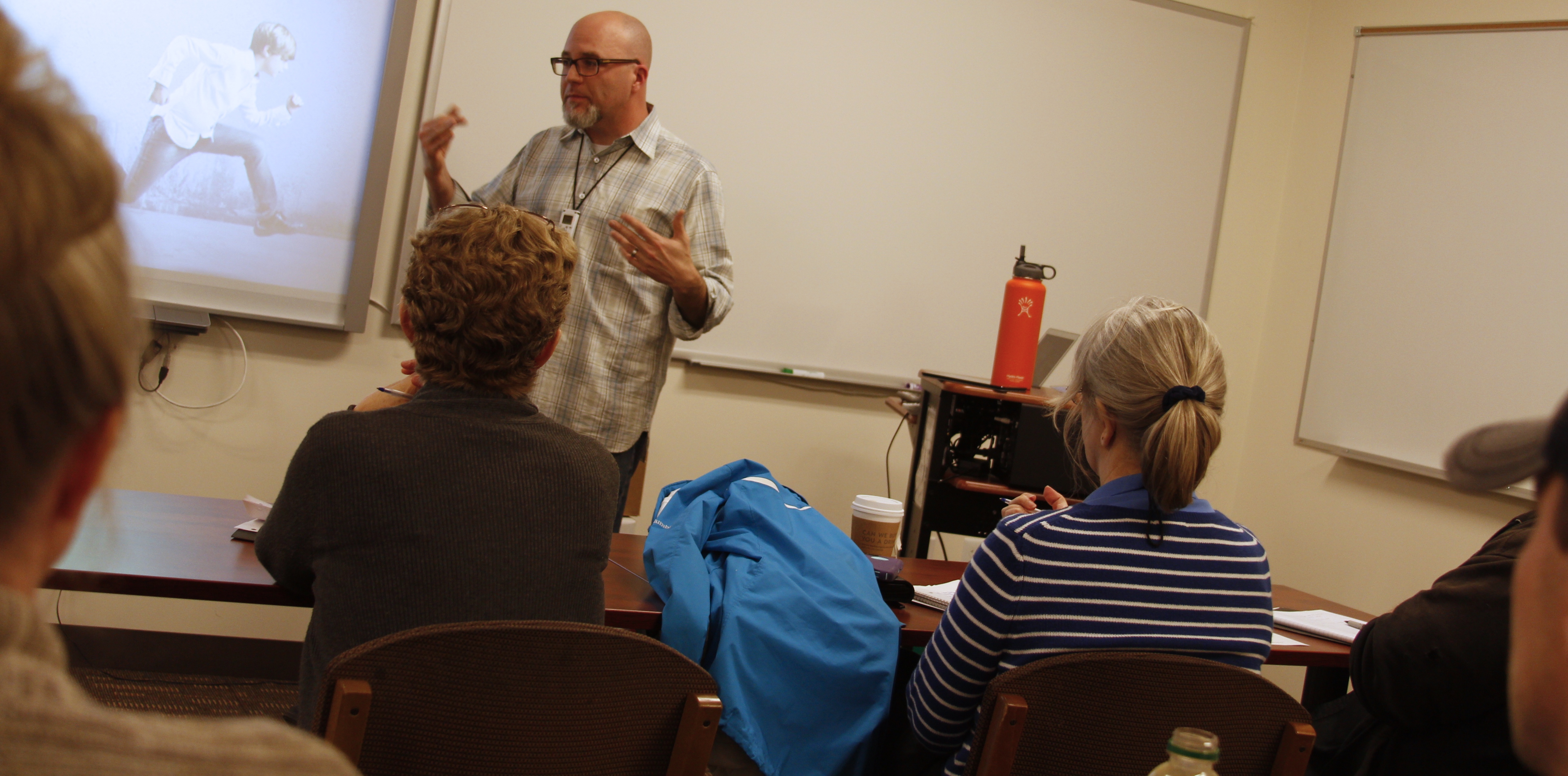
Marc Schelske is a writer, speaker, hobbyist theologian, recovering fundamentalist, tea drinker & motorcycle rider. Sometimes he’s a chef or a songwriter. Much more importantly, he says: “I’m also a daddy and a husband.
Marc is also the teaching elder at Bridge City Community Church in Milwaukie, Oregon. Marc served on the leadership team for past Faith & Culture Writers Conference events.
Writers Connection is for everyone who is interested in story, writing, poetry, culture, art, blogging. Come each time, come once, come as you are. All are welcome!
You can check in to let us know you are joining us by visiting our Facebook event page for this meeting here:
Gather with us for Writers’ Connection Thursday, Oct. 19, 2017 at 7 p.m. at Oak Hills Presbyterian Church (5101 SE Thiessen Road, in Milwaukie, Oregon). This is our first quarterly meeting of the calendar year! We will hear from Gina Ochsner, who teaches writing and literature at Corban University and with Seattle Pacific University’s Low Residency MFA program.
Gina is the author of the short story collection The Necessary Grace to Fall, which was selected for the Flannery O’Connor Award and the collection People I Wanted to Be Both collections received the Oregon Book Award. In 2010 Houghton Mifflin Harcourt released The Russian Dreambook of Color and Flight. Her latest novel entitled The Hidden Letters of Velta B was released in July 2016; the paperback edition will be released this summer. To find out more about Gina, please visit Gina Ochsner
It is an honor to welcome AJ Swoboda back to Writers Connection Thursday, April 20, 2017. The meeting will be held at Oak Hills Presbyterian Church in Milwaukie at 7 p.m.
Dr. A.J. Swoboda is a professor, author, and pastor of Theophilus in urban Portland, Oregon. He teaches theology, biblical studies, and Christian history at George Fox Evangelical and Fuller Seminaries, including a number of other universities and Bible colleges. He is also the lead mentor of a Doctor of Ministry program on the Holy Spirit and Leadership at Fuller Seminary. In addition, A.J. is the founder and director of Blessed Earth Northwest, a center that helps think creatively and strategically around creation care issues in the Pacific Northwest.
A.J. is the author of The Dusty Ones (Baker), Tongues and Trees: Toward a Pentecostal Ecological Theology (JPTSup, Deo), and Introducing Evangelical Ecotheology (Baker Academic). You can follow him on Twitter @mrajswoboda.
We’re thrilled to announce that Joshua Ryan Butler is our January 2017 Writers Connection!
Joshua is the author of “Skeletons in God’s Closet” (2014) and most recently “The Pursuing God,” published by Thomas Nelson in 2016. He loves helping people wrestle through the tougher topics of Christian Faith. Currently he is a pastor at Imago Dei Community.
Join us this Thursday, Jan. 12 at 7 p.m. at Imago Dei to hear from him and a chance to enter a FREE giveaway of one of his books! Click here to RSVP.
Is God lost? Many of us feel that way. It’s as if God’s gone missing, out in the universe somewhere–and we must pick up the hunt, following any trail of breadcrumbs to go find him. We speak of “searching for God,” exploring spirituality,” and “finding faith.”
But what if we have it backward and God is the one pursuing us? What if our job is not to go find God, but to stop running and hiding? Not to discover the light, but step out of the shadows? Not to earn God’s love, but simply receive it?
Jesus reveals a God who comes after us, who is on the prowl, hunting down his world for reconciliation. And the question we’re left with is not whether we’ve been good enough, jumped high enough, or sought hard enough…
We’re getting an exclusive sneak peak of Mayfield’s new book about her experience working as a missionary with a group of Somali Bantu refugees in her hometown of Portland, Oregon.
Click HERE to read the introduction and first three chapters of D.L. Mayfield’s “Assimilate or Go Home.”
Also, we are giving away a FREE copy of “Assimilate or Go Home” at our gathering!
Join us at Writer’s Connection on 7 p.m., Thursday, October 27 at Rolling Hills Community Church, Tualatin, Oregon to hear her speak. This is a free gathering, so bring a friend or two!
Click here to let us know if you’re coming! Can’t wait to see you there!
Scrolling through work emails I click on the one titled: ALL EMPLOYEES MUST READ! A pep rally type announcement opens, announcing this year’s grand mission: eliminating all errors. “Zero mistakes in the workplace, please!”
Sounds achievable in theory if we communicate diligently and dutifully carry out policy and procedures. The unspoken added phrase is there, too, “Everyone ought to try just a little harder. Nothing short of our best will be good enough.”
I feel skeptical. While I relish the idea of near perfect performance, we simply don’t hold the kind of power that promises continuous mistake-free moments.
‘I believe in grace!” I am tempted to yell at my computer, but refrain from typing out my thoughts. Perfectionism has its place, especially when people’s lives are at stake. Still the call to perfection makes me nervous and fearful, pushing an old button. I even thought I was over perfectionism. In parenting I tell myself that less than perfect is just fine! I remind my kids, “Mistakes are how we learn!” Progress is our family goal, not perfection. I’ve lowered my impossible standards and expectations in favor of peace and rest. I’ve settled into my messy reality, accepting the way things are. I am happy here where grace abounds, not eager to drastically up my performance. A call to perfection disrupts my new found freedom and peace.
Sometimes Scripture pushes that same button. While you won’t find the word “perfectionism” in the Bible, it does mention “perfect” a few dozen times. Only perfect sacrifices are acceptable gifts for God in the Old Testament. In the New Testament trials are helpful tools in becoming “perfect and complete” (James 1:4). Paul writes about “the good work which began in us and will be perfected until the day of Christ.” (Phil 1:6)
Not to mention Jesus’ rather direct statement: “So then, be perfect, as your father in heaven is perfect.” (Matt 5:48)
This type of statement disrupts my peace. My button flashes yellow alert while my mental baggage and preconceived ideas want to attach themselves to these challenging words.
Jesus knows I am not perfect so suggesting that I could be confuses me.
For too long I’ve viewed this sort of verse as an invitation to partner with Jesus in perfection. Is Jesus then endorsing perfectionism by offering to infuse his perfect life into mine? This is what I used to believe and strive for. I also used to focus on challenging verses outside their context.
So I started reading the entire passage in Matthew, which concludes with “be perfect as your father in heaven is perfect…”
Surprisingly the preceding paragraph does not mention behavior or performance or any other sort of striving. Instead it describes perfect love. The father’s perfect love is an outrageous sort of love that extends to enemies, offers prayer and compassion for those who long to harm. This perfect love embraces outcasts, strangers, even those who will never reciprocate.
Perfection from this point of view means being radically committed to wholehearted love. God’s perfection is demonstrated by the way in which he loves.
When Jesus refers to being perfect like the Father, I believe he is asking us to enter this perfect, complete, non-discriminating love. Not to become perfect in behavior or do something perfectly, but be actively present to a greater love. To enter a greater story where perfection is anchored in love. There is no shame or fear in love. Love is the perfect bond. (Col 3:14)
Every time John writes about perfection, he also mentions love. I appreciate this reminder because I tend to put love and perfection on opposite ends of the spectrum. Love is grace-filled and messy, perfection is neat and measurable.
I am learning and relearning to allow Jesus to redefine what this means for my faith. For now though we can safely assume he’s invited us deeper into his story by embracing perfect love.
Not only loving those who pat our backs, praise our children and bring us dinner, but intentionally and radically embracing the critic, the homeless, the ill-willed. Loving the rebellious, self-absorbed, the stranger and refugee. Love for those who will never thank us, know us or love us back. No strings attached.
Perfection according to Jesus is rooted in love. For you. For all.
Astrid Melton grew up in Germany before coming to the US for a year abroad at age 16. She stayed to obtain her masters degree in Physical Therapy, got married and became a US citizen a couple of years ago. She currently works part time in outpatient orthopedics/ pediatrics while homeschooling her three children and pursuing her lifelong dream of becoming a writer. Find more #freewriteramble at her blog: astridmelton.com
Writer’s Connection is excited to announce our first speaker of the new year — D. L. Mayfield!
D. L. Mayfield has just released a new book, Assimilate or Go Home: Notes from a Failed Missionary on Rediscovering Faith. A regular contributor to Christianity Today and a past columnist for McSweeney’s Internet Tendency, Mayfield is a fearless writer who pushes herself and her readers to grapple with what it really means to join God in loving the least of these. We can’t wait to hear the wisdom she has to share with us! Join us on October 27 at 7 p.m. at Rolling Hills Church.
With this new year come a few changes to Writer’s Connection. Please note that we are now meeting quarterly instead of monthly. Dates, locations, and speakers for January and April will be announced at the October meeting.
Another change: CorneliaSeigneur, after heading up Writer’s Connection the past 10 years, needs a break to focus on her continued healing since the accident. She looks forward to continuing in a role as chief cheerleader! Astrid Melton and Sarah Sanderson have stepped up to slide around in the big shoes Cornelia leaves behind. Astrid and Sarah love the Writer’s Connection community and are eager to continue creating this space for faith-filled Portland writers to gather.
The primary reasons for continuing as long as I have in Christian publishing must be selfish. They are the same reasons I do anything long-term—I like the way it makes me feel.
First, let me say I never intended to stay more than two years at either Focus on the Family or WaterBrook Multnomah. After giving five years apiece in each position, I asked God to work it out to convince my best friend, who’d previously agreed to marry me, that this was a good idea, to take our two young daughters and move from Colorado to Portland in 2010 with no steady job and very little to fall back on.
He did and she did and we did. So there you have it; maybe it was destiny.
I’ll tell you what it wasn’t. It wasn’t my genius or proper living or even prayer. I’ve never been very good at praying. And honestly, the challenge to pursue what “the market” (Christian or otherwise) deemed best never appealed much.
I had a different criteria for my decision to move that, let’s face it, is completely unreasonable. But secondly, reasonably or unreasonably, I believed 10 years was adequate training for launching an editing and writing career on my own.
God affirmed this move in many ways, not the least of which came through amazing friends who supported us. They kept me going, kept me on the rails when I wanted to fly off in rage or forget the higher purpose and go tie one on at Joe’s Tap Heaven.
I’ve been blessed to know editors and authors, readers and writers who aspired to something more than seeking personal fame and fortune. I love that the Christian book industry is about more than personal ambition and charisma, though those attitudes creep in; they’ve definitely taken their toll and still threaten to destroy much of it.
But what we believe about Jesus should make a difference in the way we live. In our professions our faith should inform how we operate and be demonstrated in the way we act in our jobs. We should strive to offer something different to clients—more patience, compassion, grace.
This is why I stay and continue to work with writers of inspirational fiction and memoirs, to live these actions out. Despite all the challenges, God keeps proving He can use broken people and broken systems for greater glory.
I’m like a lot of Christians who fall into that magical thinking that tempts us to believe the lie Jesus was offered in the wilderness: you have a way to take control. I’m NOT in control. My well-being does not depend on how well I do, how I behave, how I choose.
Maybe you’ve thought this too, if you made the ‘right’ choices then you’ll be successful. But when our supposedly right choices don’t make us successful, we can often feel shame and condemnation, the opposite of love. To be blunt, if your life sucks, you’ve got no one to blame but yourself, buddy.
That’s the bondage of legalism, of try-harder Christianity. We need to remember our success or failure isn’t our doing, it’s God’s. As one writer pointed out, this belief is a sort of God-ordained meritocracy, like getting brownie points from God if we do things just right. But it isn’t true. We don’t get happy by doing right. Most of the time we overlook the important fact that struggle and even failure is required for our happiness.
I don’t want to accept that. However, it helps when I EXPECT it, moving forward in the confidence the spirit provides.
People often resist challenges to their sense of security and control (or maybe that’s just me). However, it might be this opposition proves you’re where you need to be, proves you’re making real progress, real success.
Big vision demands that kind of commitment. No promises it’ll always make you happy — there are plenty of safety nets to leave behind. But maybe facing them in the conviction that God’s in control is a better definition of success.
Mick Silva is a former acquisitions editor who spent 10 years in Christian publishing, working with many well-known authors and writers. He is currently self-employed working with writers in all aspects of the process. He blogs at www.micksilva.com and shares his Monday Motivations with hundreds of readers. Mick lives in the Portland area with his wife and two daughters in an old house made of wood and various mosses.
Note: Hello, there! We’re excited to re-post this story from Sarah Sanderson’s blog. Sarah recently attended the annual FCWC Essay Presentation at Oregon State Penitentiary. It’s a prison ministry where participants pen down an essay and share it with inmates who are part of the 7th Step Foundation, a program created for prisoners to reduce recidivism for safer communities through mental fitness and transitional services. Click here to read the original on Sarah’s blog.
Sarah’s post is also the first of many we’re hoping to populate the blog with. Currently we are in a season of Sabbath and discernment, but we still wanted to keep in touch with our community. So we’re asking you, our community, to share your experiences at the intersection of faith and culture. We’ll be posting a new story every other Tuesday. If you’re curious or are interested in sharing your story, send an email to Jody Collins, our blog content editor/coordinator/extraordinaire at heyjode70@yahoo.com.
Now onto Sarah’s post! Cheers!
Original image: Nina Matthews
I came to the prison hungry. The club meeting started at 6 p.m., so my writers group had to arrive at the prison for check-in at 5:30 p.m., so I met the carpool at 4:15 p.m., so I left my house at 3:45 p.m., so I scarfed a sandwich at 3:38 p.m. To my well-regulated stomach, this did not qualify as dinner.
As I drove to the carpool location, I ruminated on the dinner situation, and wondered briefly if they would have any food to offer us. “Of course they won’t,” I quickly reproached myself, and brought tears to my own eyes thinking about the loss of such a basic freedom as the ability to offer hospitality.
It turned out, I was wrong. The inmates had wrapped cinnamon rolls in paper towels, and pre-poured cups of water and bright red fruit punch. When a cinnamon roll was offered to me, my first instinct was to decline it (didn’t the prisoner-chefs do horrible things to the food on Orange is the New Black?), but then I remembered that I was, actually, hungry.
“You look like you want to say yes,” the club president, Francisco, laughed, as he watched my eyes linger on the sugar-drizzled dough balls.
I nodded. “Okay, then,” I agreed. It seemed rude not to take it; it was all they had to offer me.
I was wrong, again. The men of the 7th Step Foundation at the Oregon State Penitentiary had much to offer. They offered their respect, listening attentively to our varied essays. They offered generous awards to each of us: “Most Articulate,” “Most Energetic,” “Most Moving.” Most of all, they offered their stories.
I spent most of my time, after the essays were read, talking with two particular prisoners. The first, Dan, was 56 years old. A long, white ponytail hung down his back, and he was missing a front tooth. He had been in prison for 30 years, and had another 27 years to go. He would be 83 when he could be released, but he expected to die before then.
The other prisoner who shared his story with me, David, was 39 years old, and had been in prison for 20 years already. Intelligent eyes flashed behind yellow-tinted glasses as he told me his story. “I did something dumb when I was 19, and I’m never getting out of here.” For killing two men at a shooting range, in response to a perceived threat, David had been sentenced to life without the possibility of parole, or, as he put it simply, “life without.”
Both of these two men, separately from one another, spoke of similar themes. When I asked Dan what was the hardest part of prison life, he immediately responded, “Non-existence. Feeling like I don’t really exist.” David responded to a similar question, “It feels like I’m not really a person at all.” Both men spoke of having few or no meaningful contacts remaining outside the prison walls. Both spoke of keeping to themselves within the prison community. Both spoke of wanting to kill themselves.
Though they had recently eaten (such as it was – apparently a favorite meal was pork tenderloin, “because you can tell what it is”), these men were much, much hungrier than I. They were hungry for human contact. They were hungry for dignity.
They offered me cinnamon rolls and fruit punch; what did I have to offer them? I had spoken of Jesus Christ in my essay, and Dan confided that he trusted in Jesus, too.
“I don’t like to go to the church groups they have here,” he allowed, “but I do my own prayers that I have to do.”
But David was warier. “I’m a Jew,” he informed me, testily.
“That’s okay!” I responded, too brightly. “Jesus was a Jew!”
David’s eyes measured the distance between us. “It’s fine if what you believe about the next life makes you a better person,” he observed, and it sounded like a sentiment he had expressed many times before. “But what about this life? What about a second chance?” He laid his hands open on the table between us. “I was a first-time offender. I never even had a speeding ticket. I know I took those guys’ lives away, and I can never repay that. But how can you send a 19 year old kid away for the rest of his life?”
I believed that Jesus could make a difference to David’s life even if he never got out of prison, but I also felt in that moment that if I tried to convince him of that, it would only sound hollow. How did the Jesus of my middle-class suburban life translate to a maximum-security penitentiary?
“I’m going to pray for you,” I finally told David as our conversation wrapped up.
“That’s fine,” he replied. “Go ahead.”
“So what do you want me to pray?” I pressed.
He seemed genuinely taken aback. “What do you mean?”
“What do you want me to ask God to do for you?”
The response to that question came right away. “Prison reform. I want a chance to get out of here. I want hope.”
“Okay,” I promised, and I knew I was accepting a burden that would not be easily lifted. “I’m going to ask God for that.”
At the end of the meeting, the club president got back on the microphone to remind the men that the club had to pay for the cinnamon rolls, so member donations were appreciated. David had just informed me that the prisoners’ maximum salary, for working 40 hours a week, was $158 a month. I wondered how much the prison charged for the cinnamon rolls and fruit punch. It turned out that these men had offered me a very costly hospitality, indeed.
I drove home and ate a taco, leftovers from my family’s dinner hours earlier. My hunger disappeared. But the hunger in the eyes of the men I met in prison will stay with me for a long, long time.
Sarah Sanderson is working towards an MFA in Creative Writing through Seattle Pacific University. She lives in Gladstone, Oregon, with her husband and four children. Read more at www.sarahlsanderson.com.



 Mark your calendar for the next Writers Connection Thursday, January 18, 2018 at 7 p.m. when Marc Schelske is set to speak! The meeting will be at Oak Hills Presbyterian Church located at

 which was selected for the Flannery O’Connor Award and the collection People I Wanted to Be
  Both collections received the Oregon Book Award. In 2010 Houghton Mifflin Harcourt released The Russian Dreambook of Color and Flight. Her latest novel entitled The Hidden Letters of Velta B was released in July 2016; the paperback edition will be released this summer. To find out more about Gina, please visit
 Dr.
Dr. 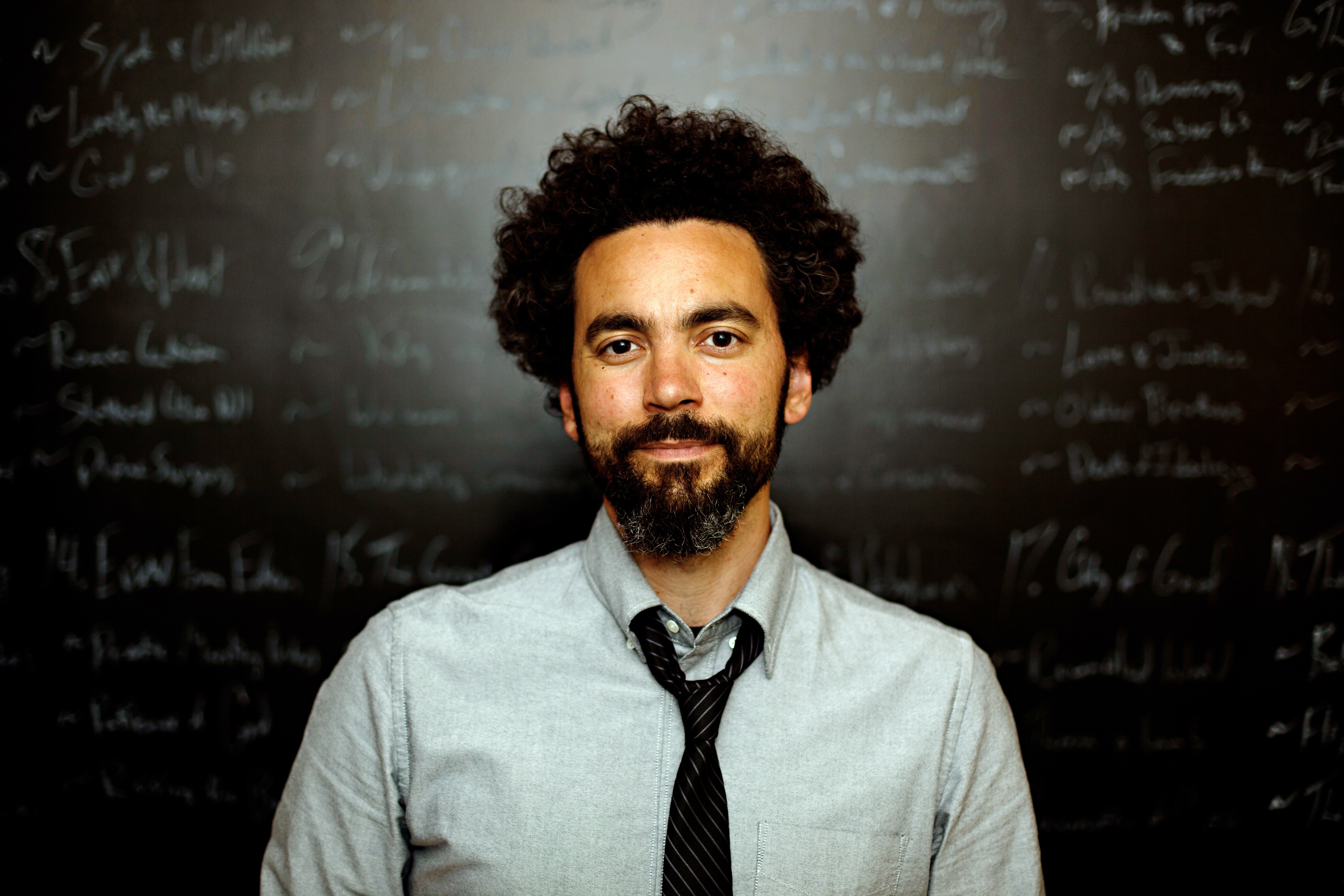
 Joshua is the author of “Skeletons in God’s Closet” (2014) and most recently “The Pursuing God,” published by Thomas Nelson in 2016. He loves helping people wrestle through the tougher topics of Christian Faith. Currently he is a pastor at Imago Dei Community.


 Astrid Melton grew up in Germany before coming to the US for a year abroad at age 16. She stayed to obtain her masters degree in Physical Therapy, got married and became a US citizen a couple of years ago. She currently works part time in outpatient orthopedics/ pediatrics while homeschooling her three children and pursuing her lifelong dream of becoming a writer. Find more #freewriteramble at her blog:


 Mick Silva is a former acquisitions editor who spent 10 years in Christian publishing, working with many well-known authors and writers. He is currently self-employed working with writers in all aspects of the process. He blogs at

 Sarah Sanderson is working towards an MFA in Creative Writing through Seattle Pacific University. She lives in Gladstone, Oregon, with her husband and four children. Read more at