
It’s ok. We are art. | 2014 Writing Contest Winner

by Kelly McGuffie

“God has filled us with the Spirit of God, with skill, with intelligence, with knowledge, and with all the craftsmanship, to devise artistic designs…for work in every skilled craft.” Exodus 35:31-33

~~~~~

My mom made it her personal mission to culturally educate her children during summer breaks from school.

She tirelessly piled my older brother, younger sister, and I into the minivan for adventures to the public library. We gathered armfuls of sticky children’s books (though I had a propensity for choosing foreign cookbooks), and quickly scribble entries on our reading club worksheets in hopes of earning elusive and grandiose prizes.

When the local community college offered workshops on topics exposing young minds to everything from earthworm composting technology to mastermind chess techniques, my mom was the first to sign us up. That is the story of how I once toured a dump and why we still tease my sister for being a chess nerd to this day.

The love my parents had for culture, history, and art saturated our family vacations. No matter what city we visited, we always stopped at three places: libraries, museums, and cemeteries. (The latter deriving from my dad’s fascination with genealogy. “Hold up your fingers for how many “greats” this dead uncle is to you and say “Cheese!”)

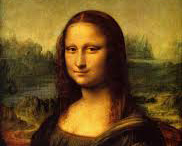
On one trip to the Portland Art Museum, which promised the wonder of ancient Egyptian creativity, my siblings and I were surprised to find that we were standing in a room full of nude sculptures. Our innocent faces showed our mortification as we realized our mother had brought us to Satan’s playground.

We looked at my mom with the same look we shot her when a movie character uttered words like “ass” or “damn.” It was a self-righteous look that said, “Mother! How could you let us be exposed to such filth?”

On this day at the art museum, my mom did not reply with the usual, “Sorry, kids.” She didn’t apologize for bringing us to a room with life-sized naked people with penises, hairy parts, and breasts.

“It’s ok, kids. It’s art.”

~~~~~

On man’s first day, when God breathed life into Adam, I wonder if there was an audience. I wonder if the birds hovered in the trees waiting for the man to wake up. Perhaps the marching ants stopped their procession for a moment to end the debate over whether this new creature would walk on two, four, six, or eight legs.

Artists are often shy about their creations, with an innate desiring to wait until the piece is complete before revealing it to the public. Even then, the perfectionist natures of many artists lead them to conceal their full talent from the public.

The painter cares deeply for what is taking shape on her canvas. It takes time and precision, but the artist knows the art is worth her investment.

How much more then does our heavenly Creator love his greatest creation—us, the only creation that is continually made new?

~~~~~

The universe came about with simple words.

Human life was birthed with a single breath.

God created a lot of things in those first days, but the greatest was humanity: the creation made in the image of God.

Selem ‘elohim: picture or likeness of God. But the Israelite’s did not separate between physical and spiritual realms.

In the Ancient Near East, when a work of art was constructed in the image of a god, three things were believed about that painting or statue. In addition to a spirit of that god living in the statue, the likeness had the power of and the functional surrogate abilities of whatever god it was made to represent.

Growing up in a Pentecostal denomination, I heard many sermons limiting the Holy Spirit to a moment at an altar: “getting filled,” “speaking in tongues,” “being endued with power,” “when the Holy Ghost comes upon you…”

I may not speak Hebrew or Greek, but I’ve heard the tongues of men and angels. Pentecost didn’t just start happening fifty days after the resurrection.

Pentecost was happening that first day of Creation when God said, and it was.

Pentecost was happening when God breathed into Adam, and he was.

Pentecost happens every time we use our God-given creativity, and we are.

When we are brave enough to invite the Holy Spirit into our worlds, we are saying yes to a full partnership and participation in the power and function of the God whose image we bear. Imagine what humanity can do with all its voices calling out into the void, hand-in-hand with the Holy Spirit, creating something new.

Humanity was given a unique gift at the moment of its creation; it was given the image of God. We have the power of the God we represent. We have the spirit of our God living inside of us. We can function as a surrogate of our God—hands and feet that do the dirty, thankless work of loving and creating.

The sculptures in the museum that day weren’t the only things in the room deserving the distinction of being called “art.”

Humans are living art who are full of the Spirit of the Great Artist, working as co-artists who participate in the restoration of Creation to the Creator.

It’s ok. We are art.

———————————————————–

Visit Kelly’s website: www.rainbootsandbeef.com
Building Temples | 2014 Writing Contest Finalist

By Tresta Payne    

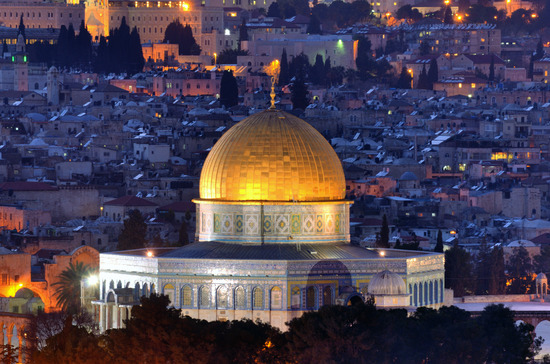
This life is for building temples.

There’s a voice that blows like the wind at the back of your mind though, and it tells you that words are wasted, imaginary things and that temples are built with greater offerings – the ones that go on lists and require only sweat and you point to them at the end of the day and proclaim progress.

Not success or satisfaction, but progress at least.

That  voice is the critic that never sleeps and is ever put to shame by an image; For his molded image is falsehood, and there is no breath in them. (Jer. 10:14)

He doesn’t own his shame though – he gifts it to you who listen. And he tempts you to build profane temples in places you were never meant to stay, where plastic is king and fake is safe and temples house merchandise for profit.

We run in circles to create breathless life. We clone images of our own design and step away from imago dei to manufacture, produce, proliferate. The world is driven by the lust for what we can have. We long for what we can hold. We believe in what we can see.

Concrete concepts, please, and make them utilitarian. It doesn’t need breath as long as it has good functionality.”

We substitute duty for art and usefulness for slow thoughts. “Practical” rules our day and the windy voice in the recesses of our mind blows harder with each product produced.

We are supposed to be Makers of Great Art, Builders of Temples, Children of the Living God and not slaves of dead duty or chasers of public opinion.

Our art needs a new spokesperson.

We need a better Voice to give decibels to our living and breathing and wrestling and surrender. A better Champion. A hand pressing heavy on our back and feeding courage to us in large chunks of words and small portions of brave, because we are building up a world of living temples.

In the desert, God called the artisans by name. We wonder if He even knows ours. We make our name tags and chase our fame so that maybe God will notice our talents and pick us and confirm our hopes: that we are artisans, too.

We lose sight of His breath in us. We forget – how quickly we forget that God the Creator made us creative in His image and our best work bears His name.

He is calling the artisans and it’s all of us in one way or another. The painter and baker and poetry-maker. The one with music in her head. The one with beauty in his heart. The one with hammer and nail and those who dream in wide swaths of color – purple for the curtains, gold for the fastenings. All the ones who see heaven and feel earth and endeavor with all their breath to write this life as a shadow of things to come, He’s calling.

His voice is softer than the bite-y whisper but louder because we hear it in our hearts, where passion trumps utility and logic. He calls us by names we never dare to call ourselves.

So we write, because we hear words touching earth. We fight the blowhard voice of Practical and Useful with a sword in one hand and a pen in the other.

His hand is a comforting pressure at our back and our very breath – every exhale joining the incense of others – is pushed out and fills the earth with facets of His glory. We breathe deep and our lungs fill with a life lived or dreamed or begging to be written.

We make larger spaces in a world that closes in on us

We are artisans in our own deserts, who build houses for His glory with beauty and craftsmanship. The landscape starves for inspiration and our hearts would dry without beauty, would whither and evaporate right away. So we erect the ebenezers that help us through our own desert and we leave them standing for travelers coming behind, markers on the pilgrimage.

We are the author-artisans whose craft makes your sand-stung eyes weep in the desert of your own isolation. We build tabernacles for your dry places, because life is about building temples, and we are.

In our promised lands we make plans for bigger and better and we write them, sing them, scribble on napkins the way to the Temple. We want desperately to build up edifices of His glory and a place for the worshippers to come.

We see in the greens of spring, and the hope that springs eternal bleeds out of our fingers and we write it. We put it down in permanence, scary and hopeful and open for ridicule.

In the end, all that we’ve written become plans for another generation – words pressed heavy in us that will be a balm in their desert and a plan in their Jerusalem. Our children, our grandchildren, for as long as the Lord may tarry, will read our hearts on screens and pages. Our craft will live longer than our lives because His hand presses heavy and they understand in writing what He whispers in our hearts.

We are all David, handing the plans to our children and trusting the work, not to men, but to Great Inspiration:All this, said David, the LORD made me understand in writing, by His hand upon me, all the works of these plans. (1 Chron. 28:19)

The LORD makes us understand in writing how these living temples are built and how His Spirit indwells the space we make – comes right in and even pushes against our comfortable boundaries. We make more space with the poetry in our prose, and we tell our posterity the plans He has pressed heavy on us.

“Build the temple,” we say emphatically. Build it now, build it forward, up and ever on. Do it and do not fear nor be dismayed, for the LORD God – my God – will be with you. (1 Chron. 28:20)

This life is for building temples.

We are the scribes of everlasting stories and whether we congregate in deserts or meet in Jerusalem, if the Author of a good story lives in us, we have temple building to do.

——————-

Visit Tresta’s website:  www.sharppaynes.com


Widening our View is the Essence of Faith & Culture Writers Conference

Cornelia Becker Seigneur

“Most people come to know only one corner of their room, one spot near the window, one narrow strip on which they keep walking back and forth.”-Rilke

About a month before the start of the 2013 Faith & Culture Writers Conference at Multnomah University, I received an email from a pastor at a local church.

He asked why I would let William Paul Young, the author of The Shack, speak at our conference. After all, the pastor said to me, how could an event that was being held at a reputable Christian university “invite a ‘heretic’ like Young onto the campus?” as he worded it.

The pastor went on to inform me that he would not promote our conference nor would he tell others at his church about it. At the time of the event, I was an adjunct professor at Multnomah, where I served as the faculty advisor for MUSE, the student publication I founded at the school.

My first response to the pastor was to ask him if he had read the book.

“No, I have not,” he confessed.

I offered, “I know there has been controversy surrounding Paul’s work over the years, especially regarding his (fictional) portrayal of the triune God, but we are a faith and culture conference, and if nothing else, whether you agree or disagree with the way Young portrays God, we must admit that the words and story Paul created has affected culture in a big way: 20 million books sold.

May we ask the hard questions? Can we start a conversation on topics where we have differing views? Can we question the way we have done things over the years? Are we able to sit in the same room with others who have a different creative way to express their story?

That is the essence of what the Faith & Culture Writers Conference is about.

On the top of my website, I have a tagline “Live the Questions,” which is a quote by the German poet Rilke. This is my mantra. And perhaps the mantra of the conference. We should not be afraid of hard questions. We should not be threatened with differing view points, with people stretching our worlds; we should not fear discussion around a subject we feel uncomfortable with, but rather embrace the difference and see life from someone else’s world. To get beyond that one spot near the window, as Rilke notes.

I say, let’s talk.

This year as the Faith & Culture Writers Conference moves to George Fox University, we once again have invited some speakers and authors whose views and takes on issues not all attendees may agree with. Heck, not everyone is a C.S. Lewis fan. He did have witches in his books and he prefers in infant baptism, to which some object.

Our speakers are thoughtfully sparking dialogue in their work, musing over long-held practices, pushing boundaries and borders, and asking questions that open up fresh perspectives, challenge presumptions, and stretch views.

Take Sarah Bessey, as an example. In November 2013, she released her first book, Jesus Feminist, the title itself stopping people from giving her a voice. Yet, if you can get beyond stereotypes and open up the pages of Bessey’s book, you’ll find the mother of three captivated by Christ while at the same time challenging the church to reconsider gender-based restrictions on women in ministry.

We welcome speakers — who are at once authors, professors, theologians, bloggers, journalists, movement starters, activists, editors — at the Faith & Culture Writers Conference to open up the doors to dialogue on issues in our current culture and we trust they will do so with grace, humility, vulnerability and the Spirit leading them. Can we bathe in discussions with differing views, and allow ourselves to listen rather than immediately criticize, and engage without feeling threatened? Instead of judging, let’s perhaps ask, “Hmm, I wonder what they mean by that? Let me find out.”

Other speakers this year — Tony Kriz, Paul Louis Metzger, Randy Woodley, Micah J. Murray, Natalie Trust, Emily Maynard — have also written and spoken on topics that might have made some people uncomfortable. That’s okay.

We’re about engaging culture, starting conversations, expanding our worlds.

And, maybe make new friends along the way.

Which makes me think about a story I read in Christianity Today about how, after writer Tim Challies calls into question Ann Voskamp’s theology, calling her popular book One Thousand Gifts “dangerous.”

And, how did Ann respond? Why invite him and his family to dinner, of course.

He accepted and during their time together, he apologized to her. In our online world, it’s easy to criticize someone we cannot see face to face. It’s a click of a button to publish judgment. But, when you are face to face with someone, it’s a whole different ball game. Being present matters.

Now, I realize of course things don’t always have a happy ending like this, but it illustrates that we can at least be in the same room together, maybe even share a dinner. Or coffee. We can extend grace and mercy and humility toward others and not be defensive.

And maybe, just maybe we can do just as Rilke said:

“I live my life in widening circles that reach out across the world.” Rilke

www.corneliaseigneur.com


From Behind the Pages to In Front of a Crowd

By Leanne Sype


As an editor, I spend the majority of my time buried in the pages of unpublished books, blogs, and other beautifully blunder-filled prose.  I am energized by what I do, and I enjoy (prefer) being behind the scenes helping my writers polish their message so it shines for the world. I take what I do very seriously because writing is hard… and for most authors, editing is excruciating.  I respect that.  I honor it.  Hey, I’m a writer too, so I get it!

I love editing, though.  It’s my favorite part of the entire writing process because it is where the smoke clears and the destination you were trying to reach comes into view.  But more than editing, I love cultivating relationships with other writers.  I am inspired, intrigued and taught by my community of fellow writers, readers, and life-livers.  I find great joy in learning from others and engaging in discussions of or relating to reading and writing and life–life is what gives us the material about which we write.

So imagine my delight when I was asked to speak at this year’s Faith and Culture Writer’s Conference!

*hand to mouth gasp*

Oh yes!  I’m coming out from behind the pages and getting in front of a crowd.  EEP!  I’m stoked!

Why?  Several reasons but here are the main two:

1) Community!  Writing is a solitary (and sometimes dark) endeavor that requires community engagement.  Our craft, as writers, messes with the psyche, causing both doubt and euphoria regarding our skills in a matter of seconds.  A writer’s conference brings us together with others who understand the celebrations and commiserations associated with the writing process.

Writers are also a community of creators who share a common DNA for an art we simply must share with others, yet each individual is as unique as the stories he/she creates.  We come together at an event like this and gather knowledge, perspective, and inspiration that help us keep creating and sharing with the world– better than we did before.

2) Learning.  I hope to forever be a scholar of the writing craft–always learning how I can be better.  Though I am excited about the opportunity to speak, I’m looking forward to being part of this event at a student.  Reading through the session-topic schedule is analogous to walking through a See’s Candy shop… everything looks so good I just don’t know which ones to pick!

The bottom line is this: when it comes to writing, the rules are changing, the publishing arena is changing, and what readers want from content and its authors is changing.  I want (need) to know how to better connect with my readers.  I need to know how to better help my clients so they can reach their publishing dreams.  And everyone who’s speaking at this conference will offer perspective on how to be better.

Plus, the two keynote speakers are Ken Wytsma (founder of The Justice Conference) and William P. Young (author of The Shack), both of whom I respect and believe will offer outstanding insight/testimony!  To be honest, I am a bit geeked-out about hearing them live.

So what will I speak about?

My session is called “Beyond the Mechanics: Editing for Audience Connection versus Proofreading for Mistakes.”  I will illustrate the differences between editing and proofing, how to craft your message so it connects with your reader.  A reader does not connect with pretty words and perfect punctuation; however, good word choice and clean grammar are necessary for a reader to understand your message and take it to heart.  That is to say both editing and proofreading are crucial to your writing process…and completely different from one another.

I’ll be unpacking what all this means and how to approach this phase.

Enough about me! If you’d like to come to the conference, you should definitely come because you are invited!

You can also hop on over to the Faith & Culture Writers Connection Facebook page for updates and announcements.

Thanks for reading through this awfully long post, my friends. It truly is a always a wonderful opportunity for all who come, so I wanted to be thorough about why this is so from my perspective.  I hope to see you there… would love to meet you!


Where God May Lead…

By Bethany Jackson

Our yearning to write can come at any point in our life. Young or old, experienced or beginner, at some point for us there comes a deep desire to pick up a pen and tell a story. I finally listened to the nudging after many years of busying myself with other activities and did not ignore it in 2010. I joined a group called the Writers Connection Group at Rolling Hills Community Church where I attend. There I found a group of writers from every genre, age group and level of experience in attendance.

Dusting off my keyboard and listening to the most fundamental advice, I began writing again. The group was not a class but something even more important for me, a springboard of encouragement to just do it. Just write and let God fill the pages with His inspiration… through our fingers to put those words on paper.

After some time had passed and I grew to know the director, Cornelia Becker Seigneur, I was invited to join the Leadership Team for the first Faith and Culture Writers Conference being held at Western Seminary in 2011. I must tell you that this was indeed a true honor for me. As I walked into the room where the meeting was being held, I was so thankful for being obedient to the nudging in my heart to follow God’s leading to that first meeting at Rolling Hills. I sat down amongst five other women of faith. When introduced, tears welled up in my eyes as I felt unworthy of the honor that this invitation held. I knew in my heart God had a plan for the women around the table and if we stayed in His will and let Him lead us, the conference would be all that He would want it to be.

Now two years later and being asked to be the Administrative Assistant for the second Faith and Culture Writers Conference, I know that being obedient to God’s “nudging” is the first step to being available for Him to work in our lives. Putting a conference together can certainly be a daunting task, but when we let God lead and direct, He somehow puts each task into manageable steps.

We hope that you will be a part of the conference. If you feel a nudging in your heart to come, don’t ignore it, as God may have a beautiful plan for you that day. It is in the small things that God leads us into bigger experiences with Him.

~ Bethany Jackson


Making a Way in the Wilderness

By CORNELIA BECKER SEIGNEUR

It is so exciting to be back this year for the second Faith & Culture Writers Conference on April 5 and 6, 2013.  I am especially grateful to be at Multnomah University where I serve as the faculty advisor for MUSE student publication, which I helped launch in 2011.  I have been an adjunct professor at Multnomah since 2010, and I am thrilled that Multnomah has caught the vision for this conference.

I have been a freelance journalist for The Oregonian since 1996, specializing in faith, culture, family and community stories.  Bottom line is I pen positive stories about ordinary people doing extraordinary things.  Over the years, people have asked me how I got started writing and how am I able to share so many stories of faith. I believe that our culture is hungry for stories that share hope and faith and community.  We need to be looking for those stories and be willing to share them.  Creativity and the literary arts — indeed, all the arts — are a gift from the Creator.

I love connecting and networking engaging fellow people of faith to encourage them to embrace their creative calling. I have always viewed my writing as a ministry, as a calling, as a way to share truth.  Quoting Martin Luther on my Twitter account, I believe that, “If you want to change the world, pick up your pen and write.”

At Rolling Hills, I had put out a call for writers of any and all genres to meet for a time of fellowship.  We had 50 people show up in a space for 25. It showed me that people of faith are interested in this creative calling and they want to gather in community to encourage one another.  Fellow believers are looking for a place to bond around their mutual love for creativity and the Word.  That is when we began dreaming of a larger event, where we would gather hundreds of creative people of faith together for a day to engage, encourage, challenge, and inspire one another in this mutual creative calling on our lives.

I had been involved with the Network for Women in Leadership at Western Seminary, where they used to host a women’s writers conference every other year under the direction of Bev Hislop.  She decided to cease that conference, but was open to something new.  That is when we began meeting and talking about my vision for the Faith & Culture Writers Conference.  She loved the idea and allowed us along with a great leadership team to bring the conference to their campus in 2011.

It was such a wonderful, overwhelmingly positive day filled with creative energy.  I had people come up to me during the event and say they’ve never been to anything like it.  One man wanted to duplicate this in the Seattle area.  Something about the event struck a cord.  People asked if we would return in 2012, but my daughter Rachel was getting married that year and so I knew I could not plan it.  But, 2013 was on my radar.

When the time got closer to think about another conference, Western Seminary decided they were going in another direction (plus, we had outgrown that venue our first year), so I approached Multnomah University.  That made the most sense to me as I am on staff there.  I am grateful that Dean of Campus Life Dave Groom–whom I report to as the faculty advisor for MUSE student publication–love the idea as well.

God laid on my heart those who should help head up the conference this year.  It was a no-brainer to have Bethany Jackson return.  I asked her to join our conference leadership planning team in 2011 and her expertise in event management and facility coordinating was priceless.  This year, Bethany serves as Administrative Assistant.  Kari Patterson was another one that came to mind right away as another potential planning team member.  Kari introduced herself to me at the 2011 conference after the breakout session I led on Freelance Writing.  A fellow West Linn mom, Kari’s soft heart and drive to write is contagious, and she happily joined the team for the 2013 conference, serving as the communications coordinator.  I met Ashley Larkin, this year’s literary agent and mentor coordinator, two years ago, falling in love first with her writing on her blog.  With so many shared connections, including West Linn and the University of Portland, I invited her to my Writers Connection at Rolling Hills, and we have been friends ever since. Her soft heart and get-it-done attitude are exemplary, and our theme verse Isaiah 43:19 came from her.  Ana Brors, our Social Media strategist and web designer, reached out to me on our Faith & Culture Writers Connection Facebook page this year.  She had attended our 2011 event and loved it.  I found her expertise in social media so helpful, asking her to join our leadership planning team as well.

We are excited about our top-notch line up of speakers for 2013. S ome big names — William Paul Young, author of the Shack, Ken Wytsma, The Justice Conference Founder, Brian Doyle, author of 13 books, Dan Merchant, Lord, Save Us From Your Followers filmmaker and producer — and we also have some lesser known names whom I am excited to introduce into the conversation around the intersection of faith and culture and the arts– Keith Turley, author, publisher and marketer from Seattle, Tyler Braun, 20-something pastor, blogger, and author, and Christal Jenkins, speaker and author of three books.  And, Martin French, an exquisite artist, illustrator and art professor, once again designed our classy WORDS logo, incorporating our new theme.

One of the things noted on the survey we took after the conference in 2011 was that people wanted more fellowship during the conference. Time to talk with fellow attendees and speakers.  So we have added Friday night this year, and an after the event social hour on Saturday.

Feel free to shoot me an email with questions at cornelia@corneliaseigneur.com

Or text or call me 503-318-3480

You may also get a hold of our conference administrative assistant Bethany Jackson at newbethany1@gmail.com