 By Marc Schelske
I started calling myself a writer a little more than a year ago. The truth is that I’ve been writing all of my life. I’ve got a stack of book starts buried in lost corners of my computer. I’ve been writing original content in the course of my employment for almost 20 years now. I self-published a book on Amazon almost exactly 2 years ago. (Man, was that cool!)
Then, at last year’s Faith & Culture Writer’s Conference I pitched a book and ended up with an agent! But even still, it took a little stern encouragement from Jeff Goins to push me over the emotional line of actually referring to myself as a writer.
One of the tasks I started thinking about as I started taking my writing more seriously was the serious quest that all writers must embark on: “Finding my voice.”
I worried about my writing voice as I blogged. I fretted that I might invest so much time building a blog, then discover I was writing in the wrong voice all along. Then what?
I started paying attention to the voice of writers I admired. What were the secret ingredients? How did Ann Lamott come off so self-effacing, so honestly-insecure and hilarious? What made John Gruber’s technology writing so engaging? What allowed him to be so darn opinionated and yet not off-putting? I was thinking about my voice, and then I was thinking about my thinking about my voice. That’s a stressful mind-game if ever there was one!
Then I remembered something. I had already found my voice once.
I’ve been a professional speaker for… well a little more than 20 years now. I’m closing in on a thousand presentations. During that time, I went through a host of stages.
- There was the “Karaoke stage” where I tried speaking in the style and tone of various famous speakers I admired.
- There was the “Memorized Perfection stage” where I not only wrote the presentation word-for-word, but then memorized the tone, the gestures, the whole darn thing.
- For a few years I was in the “Speaking Factory stage” where I presented three different original talks every week for two years straight.
Through all of that I’ve tried on a pile of different voices. I’ve channeled African American preachers, comedians, TED talk presentations, professors, and the voice I imagine favorite authors speaking in. In all of that time, I was building skills. I was building experience. I was building courage. But I wasn’t really finding my voice.
I found my voice when I decided what I really had to offer.
I’ve been a preacher for most of my public speaking experience, so I had the authority of scripture and the buy-in of congregations that wanted to be taught. But we’ve all heard preachers. We’ve heard preachers talk about the very same scripture. What makes the difference between one you connect with and one you don’t?
At first I thought what I had to offer was great scholarship. So, I’d study and research and prepare so I could understand my material as deeply as I could. That helped me be accurate and thoughtful, but it wasn’t my voice.
Then I thought what I had to offer was well-crafted material presented with excellence. So, I’d write and re-write. I’d practice and practice. That made my presentations less painful for the audience for sure, but it wasn’t my voice.
At one point I thought what I had to offer was a twist, a new way of looking at an old truth. So, I’d hunt and pray and reflect on my material, always looking for a new angle. That made my work more interesting — sometimes in a helpful way, sometimes not so much… It also wasn’t my voice.
I found my voice when I learned that what I have to offer, my unique view, was my honest authentic vulnerable truth.
Over and over I experienced this. I’d put hours and hours into a presentation, crafting every edge, and the audience would be unmoved. Then I’d take a risk, push past the very visceral panic in my gut, and share something from my own journey. Some moment of insecurity or fear, a place where I blew it, my own weakness and doubt. Those moments? Every. Single. Time. People responded. They were moved. They were challenged. They grew.
I found my voice when I started telling my truth.
As a writer, I’m re-learning this lesson. I’m re-learning what it looks like to offer great content, to do it in a way that connects with people—but most of all, to do it in the most honest, authentic, vulnerable way I can bear. That’s where my voice resides.
It’s a scary place to write from. But it’s also when you start writing things that matter, things that will move people. Write as much as you can. Master the technical skills. Blog, because blogging is to writers what gigging is to musicians—it’s practicing in public. But most importantly, tell your naked honest truth. That’s where you’ll find your voice.
————————————–
Marc Alan Schelske attended his first Faith & Culture Writers Conference in 2014, and returns this year as an important member of the leadership planning team. He serves as the email and launch coordinator as well the scribe.
Marc is the author of Discovering Your Authentic Core Values, an upcoming online course called, “How to read the Bible to Hear God and Grow without Having to be a Legalist, a Theology Professor, or a Crackpot,” and has a book in development about the intersection of faith and emotion, and is represented by the DC Jacobson Agency.
Marc grew up in Ohio, but he’s lived in the Northwest long enough to feel like a native. Marc is a husband, dad of two, speaker, writer, hobbyist theologian, recovering fundamentalist who drinks tea & rides a motorcycle.
Visit him at: MarcAlanSchelske.com |Twitter: @Schelske


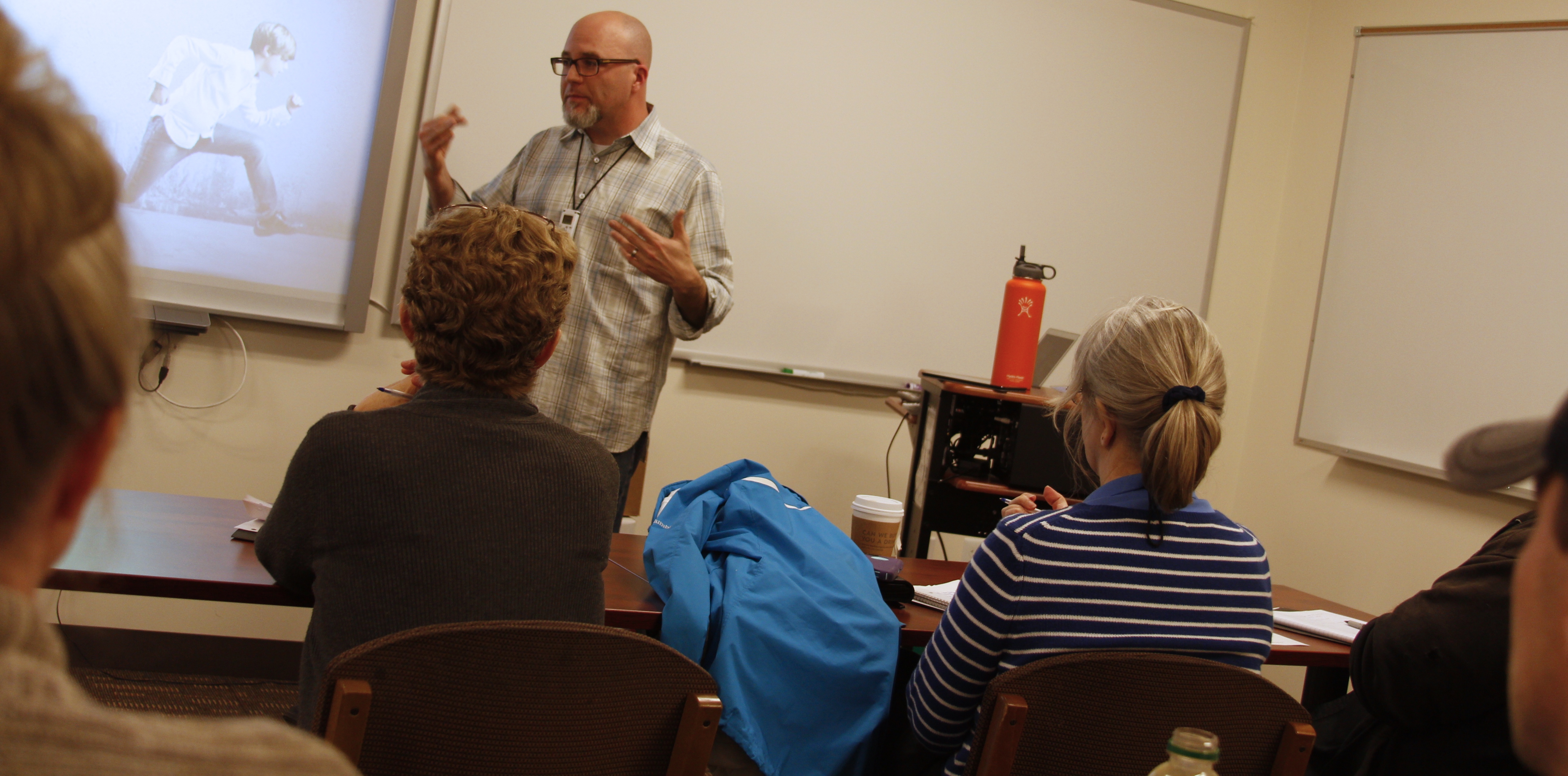 Mark your calendar for the next Writers Connection Thursday, January 18, 2018 at 7 p.m. when Marc Schelske is set to speak! The meeting will be at Oak Hills Presbyterian Church located at 5101 SE Thiessen Road in Milwaukie Oregon.
