It’s ok. We are art. | 2014 Writing Contest Winner

by Kelly McGuffie

“God has filled us with the Spirit of God, with skill, with intelligence, with knowledge, and with all the craftsmanship, to devise artistic designs…for work in every skilled craft.” Exodus 35:31-33

~~~~~

My mom made it her personal mission to culturally educate her children during summer breaks from school.

She tirelessly piled my older brother, younger sister, and I into the minivan for adventures to the public library. We gathered armfuls of sticky children’s books (though I had a propensity for choosing foreign cookbooks), and quickly scribble entries on our reading club worksheets in hopes of earning elusive and grandiose prizes.

When the local community college offered workshops on topics exposing young minds to everything from earthworm composting technology to mastermind chess techniques, my mom was the first to sign us up. That is the story of how I once toured a dump and why we still tease my sister for being a chess nerd to this day.

The love my parents had for culture, history, and art saturated our family vacations. No matter what city we visited, we always stopped at three places: libraries, museums, and cemeteries. (The latter deriving from my dad’s fascination with genealogy. “Hold up your fingers for how many “greats” this dead uncle is to you and say “Cheese!”)

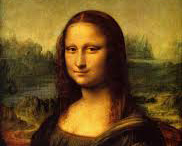
On one trip to the Portland Art Museum, which promised the wonder of ancient Egyptian creativity, my siblings and I were surprised to find that we were standing in a room full of nude sculptures. Our innocent faces showed our mortification as we realized our mother had brought us to Satan’s playground.

We looked at my mom with the same look we shot her when a movie character uttered words like “ass” or “damn.” It was a self-righteous look that said, “Mother! How could you let us be exposed to such filth?”

On this day at the art museum, my mom did not reply with the usual, “Sorry, kids.” She didn’t apologize for bringing us to a room with life-sized naked people with penises, hairy parts, and breasts.

“It’s ok, kids. It’s art.”

~~~~~

On man’s first day, when God breathed life into Adam, I wonder if there was an audience. I wonder if the birds hovered in the trees waiting for the man to wake up. Perhaps the marching ants stopped their procession for a moment to end the debate over whether this new creature would walk on two, four, six, or eight legs.

Artists are often shy about their creations, with an innate desiring to wait until the piece is complete before revealing it to the public. Even then, the perfectionist natures of many artists lead them to conceal their full talent from the public.

The painter cares deeply for what is taking shape on her canvas. It takes time and precision, but the artist knows the art is worth her investment.

How much more then does our heavenly Creator love his greatest creation—us, the only creation that is continually made new?

~~~~~

The universe came about with simple words.

Human life was birthed with a single breath.

God created a lot of things in those first days, but the greatest was humanity: the creation made in the image of God.

Selem ‘elohim: picture or likeness of God. But the Israelite’s did not separate between physical and spiritual realms.

In the Ancient Near East, when a work of art was constructed in the image of a god, three things were believed about that painting or statue. In addition to a spirit of that god living in the statue, the likeness had the power of and the functional surrogate abilities of whatever god it was made to represent.

Growing up in a Pentecostal denomination, I heard many sermons limiting the Holy Spirit to a moment at an altar: “getting filled,” “speaking in tongues,” “being endued with power,” “when the Holy Ghost comes upon you…”

I may not speak Hebrew or Greek, but I’ve heard the tongues of men and angels. Pentecost didn’t just start happening fifty days after the resurrection.

Pentecost was happening that first day of Creation when God said, and it was.

Pentecost was happening when God breathed into Adam, and he was.

Pentecost happens every time we use our God-given creativity, and we are.

When we are brave enough to invite the Holy Spirit into our worlds, we are saying yes to a full partnership and participation in the power and function of the God whose image we bear. Imagine what humanity can do with all its voices calling out into the void, hand-in-hand with the Holy Spirit, creating something new.

Humanity was given a unique gift at the moment of its creation; it was given the image of God. We have the power of the God we represent. We have the spirit of our God living inside of us. We can function as a surrogate of our God—hands and feet that do the dirty, thankless work of loving and creating.

The sculptures in the museum that day weren’t the only things in the room deserving the distinction of being called “art.”

Humans are living art who are full of the Spirit of the Great Artist, working as co-artists who participate in the restoration of Creation to the Creator.

It’s ok. We are art.

———————————————————–

Visit Kelly’s website: www.rainbootsandbeef.com
Building Temples | 2014 Writing Contest Finalist

By Tresta Payne    

This life is for building temples.

There’s a voice that blows like the wind at the back of your mind though, and it tells you that words are wasted, imaginary things and that temples are built with greater offerings – the ones that go on lists and require only sweat and you point to them at the end of the day and proclaim progress.

Not success or satisfaction, but progress at least.

That  voice is the critic that never sleeps and is ever put to shame by an image; For his molded image is falsehood, and there is no breath in them. (Jer. 10:14)

He doesn’t own his shame though – he gifts it to you who listen. And he tempts you to build profane temples in places you were never meant to stay, where plastic is king and fake is safe and temples house merchandise for profit.

We run in circles to create breathless life. We clone images of our own design and step away from imago dei to manufacture, produce, proliferate. The world is driven by the lust for what we can have. We long for what we can hold. We believe in what we can see.

Concrete concepts, please, and make them utilitarian. It doesn’t need breath as long as it has good functionality.”

We substitute duty for art and usefulness for slow thoughts. “Practical” rules our day and the windy voice in the recesses of our mind blows harder with each product produced.

We are supposed to be Makers of Great Art, Builders of Temples, Children of the Living God and not slaves of dead duty or chasers of public opinion.

Our art needs a new spokesperson.

We need a better Voice to give decibels to our living and breathing and wrestling and surrender. A better Champion. A hand pressing heavy on our back and feeding courage to us in large chunks of words and small portions of brave, because we are building up a world of living temples.

In the desert, God called the artisans by name. We wonder if He even knows ours. We make our name tags and chase our fame so that maybe God will notice our talents and pick us and confirm our hopes: that we are artisans, too.

We lose sight of His breath in us. We forget – how quickly we forget that God the Creator made us creative in His image and our best work bears His name.

He is calling the artisans and it’s all of us in one way or another. The painter and baker and poetry-maker. The one with music in her head. The one with beauty in his heart. The one with hammer and nail and those who dream in wide swaths of color – purple for the curtains, gold for the fastenings. All the ones who see heaven and feel earth and endeavor with all their breath to write this life as a shadow of things to come, He’s calling.

His voice is softer than the bite-y whisper but louder because we hear it in our hearts, where passion trumps utility and logic. He calls us by names we never dare to call ourselves.

So we write, because we hear words touching earth. We fight the blowhard voice of Practical and Useful with a sword in one hand and a pen in the other.

His hand is a comforting pressure at our back and our very breath – every exhale joining the incense of others – is pushed out and fills the earth with facets of His glory. We breathe deep and our lungs fill with a life lived or dreamed or begging to be written.

We make larger spaces in a world that closes in on us

We are artisans in our own deserts, who build houses for His glory with beauty and craftsmanship. The landscape starves for inspiration and our hearts would dry without beauty, would whither and evaporate right away. So we erect the ebenezers that help us through our own desert and we leave them standing for travelers coming behind, markers on the pilgrimage.

We are the author-artisans whose craft makes your sand-stung eyes weep in the desert of your own isolation. We build tabernacles for your dry places, because life is about building temples, and we are.

In our promised lands we make plans for bigger and better and we write them, sing them, scribble on napkins the way to the Temple. We want desperately to build up edifices of His glory and a place for the worshippers to come.

We see in the greens of spring, and the hope that springs eternal bleeds out of our fingers and we write it. We put it down in permanence, scary and hopeful and open for ridicule.

In the end, all that we’ve written become plans for another generation – words pressed heavy in us that will be a balm in their desert and a plan in their Jerusalem. Our children, our grandchildren, for as long as the Lord may tarry, will read our hearts on screens and pages. Our craft will live longer than our lives because His hand presses heavy and they understand in writing what He whispers in our hearts.

We are all David, handing the plans to our children and trusting the work, not to men, but to Great Inspiration:All this, said David, the LORD made me understand in writing, by His hand upon me, all the works of these plans. (1 Chron. 28:19)

The LORD makes us understand in writing how these living temples are built and how His Spirit indwells the space we make – comes right in and even pushes against our comfortable boundaries. We make more space with the poetry in our prose, and we tell our posterity the plans He has pressed heavy on us.

“Build the temple,” we say emphatically. Build it now, build it forward, up and ever on. Do it and do not fear nor be dismayed, for the LORD God – my God – will be with you. (1 Chron. 28:20)

This life is for building temples.

We are the scribes of everlasting stories and whether we congregate in deserts or meet in Jerusalem, if the Author of a good story lives in us, we have temple building to do.

——————-

Visit Tresta’s website:  www.sharppaynes.com


Wandering in Wonder | 2014 Writing Contest Finalist

By Hanna Maxwell

“God has filled us with the Spirit of God, with skill, with intelligence, with knowledge, and with all the craftsmanship, to devise artistic designs…for work in every skilled craft.”  Exodus 35:31-33 

There is a dentist’s office near my house that I pass every now and then.  I’ve been in there twice, and while they are mean and pushy about x-rays, the hygienists are good about making sure they have your favorite flavor of fluoride on hand.  They have a reader board, and for the last couple of months, it said, “Wisdom begins in wonder.”

I have been living in a state of wonder for the past year.  Perhaps not wonder in the sense Socrates meant when he said to the young philosopher Theaetetus, “For wonder is the feeling of a philosopher, and philosophy begins in wonder”, although I have been wondering about purpose.  Why am I here?  What is the point?  What do I do now?  But those are big questions, and often I try not to wonder in that direction for fear of being lost.

The wonder of my life has been awe.  My wonder does not express itself in complete thoughts.  No I wonder why the sky is blue or I wonder if God exists.  It’s more of a wow.  It’s an exhale.  It is the simple exhalation of too muchness.  I feel unqualified for that thing we call wisdom because my wonder is not a series of why questions.  It is mostly dumb admiration.

This past year, I graduated from college with a degree in English, took a life-altering trip to Ireland and Scotland, sat at home trying to figure out a purpose, and found a job that offers stability and monotony.  And I learned to pay attention.  Or rather, started to learn.  It’s a process.  I began to actually count my blessings.  I wrote them down.  There are literally one thousand moments of wonder and thanksgiving in the back of my journal.  In the long months of uncertainty and confusion, paying attention – in the tradition of the nature poet, Mary Oliver – became a way to pray.

I am disciplining myself to be in a constant state of amazement and live in the most present sense.  Foolishly, I thought, This is it.  All I have to do is pay attention and live in gratitude.  I have found the secret to a happy life at the tender age of nineteen.  I have no doubt that these are good things.  Very good things.  But then there came the nagging sense that this can’t be it.  Lists of blessings are not the end.  In the words of one of my favorite bands, “It is not enough to be dumbstruck.  You must have the words in that head of yours.”

This is where writing comes in.  I have words, and it turns out I had forgotten something essential.  In her poem “Sometimes,” Mary Oliver says:

“Instructions for living a life:

Pay attention.

Be astonished.

Tell about it.”

There are three steps, and the third is the Great Commission.  Go and tell.  It is not enough to sit, unmoving and unchanging, even if it is in the delirious presence of the Creator of the Universe.  Sooner or later, we have to tell about it.  I believe that we, as image bearers of the Alpha and Omega, are all given gifts to reflect and tell of his image.  It could be through cooking a meal or holding a conversation or building a house.  Or it could be writing.

But is it wise to write?  I wonder that a lot.  We are all writers and readers here, so the power of words is just a given.  Nations are formed and religions are built on simple words.  Words.  We love them and they connect us.  I have never doubted the power of words – spoken, written, overheard, seen, whispered – but I have doubted the wisdom of writing down these holders of meaning and truth.

Let me rephrase: I don’t doubt that other people should write.  I do not doubt that we should share ourselves with each other through books and blog posts.  What I doubt is me.  Should I write?  How could that possibly be a good idea?  How could sharing all of the crazy, boring, mindless things that go through my head be beneficial for anyone else?

The thing is, the Great Commission does not single out certain people.  It is great and universal.  We are given the Spirit of the very Creator.  Therefore, we are commanded to create.  We have to share the awe by whatever way we know how.  We are called out of the slavery of self-doubt to build tabernacles, to write, to share.

It is not enough for me to be dumbstruck.  I can’t assume that other people are going to find all the words.  I too am commanded to pay attention and tell about it.  Wisdom may begin in wonder, but it doesn’t end there.  You have to follow it through.  You have to wander into the deserts and consider all the big questions we’d rather not think about.

To pay attention is step one.  To live a life of wonder is the second.  And for me, step three – no matter how scary or insignificant it may seem – is to write.

——————————–

Visit Hanna’s website: