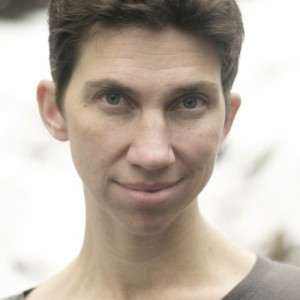
Beauty and the Book Deal

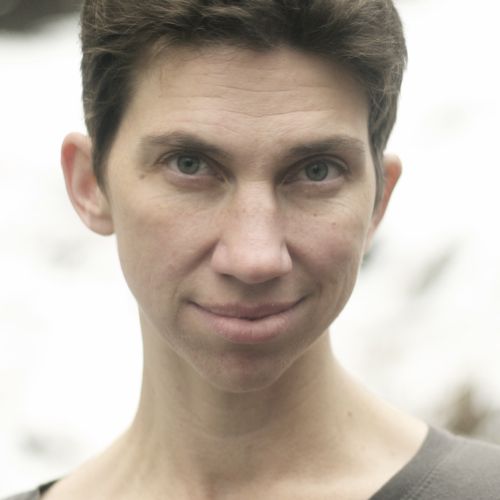
esther emeryby Esther Emery

Click here to read the original post.

The first time I dreamed of being a writer I was fifteen years old. I wrote about it secretly, in my journal with a striped, padded cover.

I wrote about it in full-throated despair.

The dead-last child in a family of brilliant minds — mother writer, father poet, siblings singer/songwriter, ballet dancer, circus artist and would-be novelist — I had already swallowed this whisper, “There is not enough room. There is not enough room. THERE IS NOT ENOUGH ROOM.”

Twenty years later, I have a book deal. Take that, you nasty little whisper.

///

My first break came at the Faith and Culture Writer’s conference. Natalie Trust invited me, and she prayed for me. I was weak-kneed for all the reasons. I sweated out my pretty blouse and had to change my shirt before my pitch session, which was the last appointment of the afternoon. I paced a path in the carpet, asked twice if there was any chance of getting in earlier, heaved myself in and out of lounge chairs. Finally I walked in and laid my mostly finished manuscript, a work of years, on a tiny college classroom desk in front of professional literary agent, Blair Jacobson.

He said it sounded interesting. He’d look at it when he had the time. About ten days later my phone rang and it was him and he said, “This is really good.”

My heart broke out in song. Like this. “AAAAAAAAAHH….”  I thought, “I’m the best writer ever in the world!!!”

Then a couple of days later I hit the ground and thought, “Oh, no. I’m a fraud. I’m terrible. They’ve got the wrong person.”

Then I switched back and forth a few more times before I remembered that this isn’t actually the part that really matters.

What REALLY matters is…how much am I willing, to see and be seen? How much am I willing to peel back this skin and reveal the beating human heart beneath?

///

I’ve been on the slow boat. Chugga chugga chugga. I’ve had work to do on the inside and the outside. It was a shock to me — some days it is still a shock to me — to realize that I have somehow become a Christian writer. Somehow I am writing for the Christian writer’s market. I think someday everybody’s going to notice that this is me, ordinary old sinner me, who just slipped in to touch the Holy of Holies and then the whole game will be over.

But that doesn’t seem to be what’s happening. What seems to be happening is that I am being called forward to testify. In print. In a hardcover book published by Zondervan, next spring. I am being called forward to give spiritual nourishment and encouragement, and to lay out grace and hope.

///

It was a Thursday, when I received the offer. At my favorite coffee shop, with a warmed up cinnamon roll on a plate on the round, wooden table. I heard this whisper, “There is enough room. There is enough room. THERE IS ENOUGH ROOM.”

In the kingdom there are enough words to say what needs to be said. In the kingdom there are prayers enough to walk on. There are plenty of extra shirts to change into if need be. And the voice of scarcity and insecurity doesn’t win.

I still feel the temptation to put my head under the covers, one more time. I still feel whipped by the winds of ego, fame in one direction, failure in the other. But in this story, that isn’t how it ends.

Look out for my words on bookstore shelves, in 2016. Because I said “Yes.”

Stop hiding from fear of failure

Marc SchelskeBy Marc Alan Schelske

Like you, I’ve got a project I’m supposed to be working on.  I’m supposed to be completing the written content for an online course I’m developing.

Most of the time I’m pretty focused on getting things done. Most of the time. But right now, I’m finding myself infinitely distracted. So many things to do. So many justifications. Social media to build connections for my writing. Another round of research. Reading just one more book full of insights on how I can be a better writer or blogger.

Lots of things to do, but honestly, it’s all just a distraction. I’m feeling enormous pressure and resistance around the one thing I really want to be doing right now. Why?

Because I’m a perfectionist.

I care a great deal about every detail. I want the things that I do to be excellent. Beautiful things inspire people. As an artist, it’s far more interesting for me to engage in crafting something elegant. The world is better when people care about excellence. But there’s something more here, something darker.

Perfectionism is a shield that hides fear of failure.

If something were truly perfect, it couldn’t fail, right? At least that’s our myth. I’ve known incredibly talented musicians who spent years tweaking their songs, rather than releasing them, and writers who will write and re-write and re-write, rather than let another human read their work. Failing to move forward is its own smothering failure.

Anne Lamott named this demon exactly when she wrote these words:

“Perfectionism is the voice of the oppressor, the enemy of the people. It will keep you cramped and insane your whole life… I think perfectionism is based on the obsessive belief that if you run carefully enough, hitting each stepping-stone just right, you won’t have to die. The truth is that you will die anyway and that a lot of people who aren’t even looking at their feet are going to do a whole lot better than you, and have a lot more fun while they’re doing it.”

Stop hiding from failure.

Fear of failure is the real enemy, and perfectionism is its voice. This fear results in paralysis or, in my case, eternal distraction. If the book never comes out, then I’ll never be critiqued on my concept, or my theology, or my writing style, or my font choice, or the hat I’m wearing in my picture. That feels so much safer.

It is safer, but it’s not life.

Steve Jobs is famously credited as saying “Real artists ship.” They do the thing they say they do. They write, or sing, or dance not in their bedroom, but out in the world where it matters.

Maybe you shouldn’t be allowed to call yourself a thing–a writer for instance–until you’ve done it in a place and time where your failure would matter, where others could judge your performance, where you had to push through the fear of being rejected and do the thing you love anyway, out in public where everyone can see.

My heart says, “I will be a writer, if I can just write exceptionally well,” but I don’t think that’s true. The truth is that I am a writer when I push through the fear of rejection and failure and share my writing with you.  After all, we are all just rough drafts.

(Oh, hey! That’s the theme for this year’s conference: Rough Draft: From Blank to Beautiful! Letting go of perfectionism is a big part of that journey.)
————————————
Marc Alan Schelske is the Launch Coordinator and crazy-note-taking secretary for the 2015 Faith & Culture Writers Conference. He loved attending the 2014 event that he came back this year to help! He blogs about intentional spiritual living at Marc Alan Schelske

———

When writing, find your Nancy

Jody CollinsBy Jody Collins

When I began blogging almost 3 years ago I had absolutely no idea what I was doing. Maybe you’ve felt the same way?

I was welcomed by a few new online friends into the High Calling network and encouraged to pursue my passion.  In just three years, God has shown me a few things about the path I’ve chosen, this ‘writing for the world,’ and given me some perspective-makers to keep me focused: 

1. Find Your Nancy

As you’re tapping and typing away at your laptop or desktop computer, there IS no audience, it’s just you and Jesus and your words.  You send them out into the blogosphere and pray for a connection.  You hope they’ll land somewhere, maybe touch a chord and speak to somebody. At least that was my prayer.

Lo and behold, one day I got a comment on a blog post. (Yay! It’s Okay to do a Happy Dance when someone leaves a comment.) Someone actually read what I wrote and told me about it!

It was an encouraging precious word from a woman named Nancy.  And she showed up every week, to read whatever I’d written. In spite of my fears that my words were than less-than-profound, she’d remark on their depth or how encouraged she felt.  Every week since then she has read and commented on my posts.

Now I have a very small crowd of ‘regulars’—fellow writers/bloggers and readers who encourage me as well. But I always remember Nancy—to write just for her—as if she was the only one listening. It personalizes my writing, which makes it more relatable.  It also gives me hope.

2. Choose Your Words

Not everything is a blog post! Like the nurse logs in the Washington Coast rainforest, some things just serve as detritus for new growth.  You know all those sticky notes and backs of envelopes?  Those inspired scribbles from a Sunday morning sermon you wrote on the back of the bulletin?  The scraps of paper you found just in time to scratch a revelation on?  Yeah, you’re probably not going to write all that down…

Not everything gets into print—much of it is practice for the process, part of the pile—a paper detritus that is the growth medium for what you DO write. The Holy Spirit will quicken in you the words that need to see the light of day.  Some of it will serve as markers, sitting in your notebook or under a paperweight, reminding you of how far you’ve come. Just keep writing. Persist, and then choose the honest, compelling words to share.

3. Build Relationships.

I am no professional marketing person to speak to what ‘platform’ is.  I am a believer and a writer and simply offer my words back to God to use as He sees fit.  Looking past all the social media skills and conferences and platform building, I think the core truth is this:  Building your blog (or your writing audience) is all about relationships.  

I am not concerned with numbers or stats, really.  For me, it’s all about connecting. But how can you extend your reach? Widen your audience? By reading other peoples’ words, commenting when you can and having them click back and find you.  That’s how others will find what you have to say.  There are other voices that share your passion and vice versa.  Maybe it’s Patheos, maybe it’s The High Calling, maybe it’s an online magazine—like Ruminate or Relief Journal or of course, where you are at now, the Faith & Culture Writers Connection!

There becomes an overlapping of the circles that you find yourself touching, an ever-expanding Venn diagram of comments and topics and people.  I personally am interested in keeping my reach small so I can go deep, rather than being wide and therefore shallow.  You’ll find what feels right for you. But wide or deep, it’s all just relationship connections.

As you write keep these three things in mind.  Find your Nancy and write for her. Choose your words and persist. Build relationships. Do this consistently and you will see your writing and creativity move forward and impact people you never thought possible.
——————————-

Jody is the Volunteer Coordinator and Administrative Assistant for the Faith & Culture Writers Conference.  She blogs at threewaylight.blogspot.com.

Three Essentials for Writing Words that Matter

Emily FreemanBy Emily Freeman

I recently watched a four and a half minute video where author and pastor John Ortberg remembers his friend, Dallas Willard. One quick segment shows a clip from a conversation John and Dallas had only a few months before Dallas passed away.
John: “How do we help people – if somebody wants to think about, “How is my spiritual life going or how is my soul doing?” – how do we help people ask and answer that question?”

Dallas: “Well, very slowly. One at a time, we listen to them . . . I think the next thing is a question and not a statement: What’s bothering you? Start there.”

They talk some more and then John makes a joke.
John: “What’s bothering you? could be an interesting liturgical question – to start the church service asking, What’s bothering you? And the people could respond back, And also you.”

I laughed out loud when he said it and so did the audience. Then, as the clip ends, Dallas can be heard saying, “That would be absolutely revolutionary.”

I had to pause the video at that moment, three minutes and fifty-five seconds in, Dallas’ deep voice and thoughtful statement hanging there in the air over my desk. That would be absolutely revolutionary. I knew I agreed with Dallas but it took me a few minutes to figure out why.

I don’t remember being expressly taught not to be bothered, but somewhere along the way I learned it anyway. To ask myself or someone else what is bothersome seems like a self-focused, self-indulgent invitation to rant or complain. But what if we were willing to look deeper in? Instead of manufacturing peace by shooing away my frustration or smoothing out my ruffled feathers, I am learning the importance of getting quiet enough to honestly consider what bothers me – not just on the surface, but deep within my soul. Sometimes what I learn is ugly or uncomfortable. But there are other times I discover right next to my frustration lives a drop of passion I didn’t realize was there and a spark of hope I didn’t realize I needed.

What does this have to do with writing words that matter? When it comes to uncovering my authentic voice as a writer, the first thing I have to know is what is bothering me. Once I’m able to honestly access my frustrations, I can begin to uncover the passion and hope that live close-by. This is how all four of my books were born.

Being frustrated doesn’t make me qualified or ready. But it does wake something up within me, something that compels me to move and want to get ready. The frustration rolls into a compulsion towards change, passion to communicate and to move into the chaos of the questions even if I don’t have all the answers. But being frustrated about an issue and compelled to do something about it won’t sustain the message for the long-term. For me, what really keeps me moving is the hope of something better. It’s important for these three things to work together – frustration, passion, and hope. Otherwise, my voice will be something I don’t intend.
Passion and hope without frustration feels inauthentic.
If I’m not bothered deeply enough, no one else will be either. Frustration is the spark that fuels the passion and the hope. Without it, my writing won’t have enough life to meet a strong enough felt need or to tell a compelling story.
Frustration and hope without passion leads to detachment.
If I’m frustrated and have hope for change but I’m not passionate about the issue, I won’t be able to engage it with enough heart to make a difference. Love is tucked deeply inside passion, and we don’t want your loveless art.
Frustration and passion without hope leads to cynicism.
In my experience, when I am frustrated and passionate without hope, I’m vulnerable to cynicism. If I don’t have hope for change, despair creeps in and my writing feels too dark and filled with angst. Without hope, I write afraid.

Frustration wakes me up. What frustrates you? Passion gets me moving. What compels you? Hope keeps me going. What do you most hope for? I’m thankful for Dallas Willard’s revolutionary question: What’s bothering you? As writers, may we be brave enough to answer it, passionate enough to engage it, and hopeful enough to influence change.


Emily FreemanEmily is the author of A Million Little Ways, Grace for the Good Girls, and Graceful. She shares her words and photographs on her own website at www.ChattingAtTheSky.com. We are honored to welcome Emily as one of our featured speakers at the 2015 Faith & Culture Writers Conference.

Dare to create in world of hushes

Brooke Perry - NEW gclEjxnBy  Brooke Perry

We’ve all had it, that moment where we release the inner weapons of our mind and soul. You know what I’m talking about, don’t you?

When we feel that blast of icy cold freedom, thoughts come easily like gifts and life seems like an adventure we can tackle one stroke of a paintbrush, pencil, key or chord at a time.

Not remembering a moment like that recently? They’re easy to forget. As children these moments are much easier to welcome in. We have an almost insane amount of resilience to the harshness of the world around us, even when it’s constantly in our face.

I remember daydreaming and being unrealistically hopeful as an eight year-old girl the very same day that my dad died in our home. I talked of my wedding as I sat on the couch after hearing the news that my dad had breathed his last. There was pain associated with the new reality of him not being at my wedding one day, but I could still see the dress.

Hope wasn’t completely sapped by tragedy.

My mind wasn’t completely numb to beauty.

There is something about a child’s mind that reflects the heart of God for us, and sadly, but not hopelessly, so many of us lose the permission we once distributed freely to ourselves to truly and fully…be.

We hold back, we doubt, we fear and when those ugly lies stand against our creative beautiful whole minds and hearts, it cheapens the wonderful and whimsical character that is in each of us.

Oh that we would dream in the face of death again. Oh that we would dare to create boldly and loudly in a world full of hushes. 

So, can I ask you to join us? We’d love to allow you the space to release yourself back into this world; after all, you are a result of God doing just that through His creation of you, your wonderful and beautiful self. Let’s see what’s still inside of you, shall we? We’ll give you the permission you need to create until you can find it in yourself to do the same.

Brooke is the Mentor & Agent Coordinator for the Faith & Culture Writer’s Conference.  She blogs at   BrookeNicolePerry.com

Allowing peace to be an overflow offering this Christmas season

Ashley LarkinBy Ashley Larkin

I’m guessing you’ve heard the song “We Need a Little Christmas Now.” For me, its commands to fill stockings, bake fruitcake and deck the halls embody the bossy pressure I feel to make everything happen during the Christmas season.

Not only do many of us experience stress in the attending and tending, gifting and hosting, baking and making, but we also know the pressure to make the holiday meaningful, magical and memorable for ourselves and for others.

And by this point in the season, we might very well feel too exhausted to enjoy or even care about the day itself.

Brennan Manning asked, “What rules our lives as we prepare for Christmas? What has power over us?”

If I’m honest, more often than I would like to admit, it is compulsion to do more and fear that I will disappoint. Yep, I’m worried I will fail Christmas.

The world yells its accusations and demands, but on this Christmas Eve I am straining to hear the whisper of what I believe might be the most forgotten gift of Jesus’ birth: PEACE.

If you stop for a moment, you might hear peace in the whistle of the wind through bare branches. Or see it in the stillness of your children snuggled up under their winter covers. Or glimpse it as you look upon the glittering lights of the Christmas tree when, for a moment, all is calm and bright.

Yes, peace is a gift to you right in the middle of this day, whatever it might hold for you – in the midst of things that do not seem right and are not right at all. Peace comes as a gift to hold in both settled spaces and fleeting moments.                             Peace is an assurance in the midst of the storm.

_____

When Love came down in human flesh into a stable reeking of animals, into a long-waiting and hopeless world, the common shepherds were the first to know. The newborn King, they were told by the angel, would be in the feeding trough.

Then a huge number of angels filled the sky, praising God for the gift of Jesus, known in the book of Isaiah as the Prince of Peace. The multitude proclaimed “PEACE to all those touched by God’s favor.”

Songs of peace on earth, goodwill toward men flooded the heavens.

On this day before Christmas, how do you need to know peace’s flood? Where do you need peace to be born, like the newborn one in the manger?

Today, I will choose to find peace in giving thanks when stresses press. I will pray for God to carry the burdens of those suffering under grief, oppression, injustice, war, sickness and fear. I will light another candle. Read Christmas stories with my daughters. Gather around the table with those I love. Sing of hearts preparing him room, and hopes and fears of all years being met in him.

I will slow to feel the peaceful rush of breath moving into and out of my lungs. I will allow Christ’s peace to settle down deep.

And then, when some of the activity of the season has died down, I’ll snuggle up with my pen and journal, and then my laptop (though it’s a bit less snuggly), reflecting and musing and creating, allowing peace to be an overflow offering.

Isaiah 54:10 tells us that the Lord’s promise of peace will never be removed from us. This Christmas, might you know the truth of that gift: peace on earth, goodwill toward you.

——————————

Ashley Larkin is a dear friend of Faith & Culture Writers. A member of the Advisory Board, Ashley will co-lead a workshop on blogging at the 2015 Mini-Retreat-Breathing Space Pre-Conference, April 10. She has served as the Agents and Editors Coordinator,  scribe, and mentor at past conferences. She can be found sharing her heart at her Draw Near blog: AshleyMLarkin.com


Overcoming Writers Block with the Rough Draft Mindset

Kari_Patterson_500By Kari Patterson

Hell hath no fury like a woman with writer’s block. Or so my husband says.

He has a right to say it, as he has endured my endless rants as I attempt to draft book chapters in the midst of life. Creativity is such a beast, yes? So untamable and infuriatingly elusive, yet intoxicating and life-giving once the muse mercifully makes her visit and you find words pouring out onto the page.

This process of writing, it can be absolute madness, especially when it “matters.” When the stakes are high, a contract is on the table, a deadline is looming, expectations soar and we find ourselves desperately hunting down that elusive creativity with such intensity we’re crazed. The more desperate we are for inspiration, the less likely we are to find it. The muse is shy.

There is, however, a gentle way to coax her out of hiding. It is a simple: the Rough Draft mindset.

This year’s Faith & Culture Writers Conference is Rough Draft: From Blank to Beautiful. I love this. It reminds me of the freedom-filled approach to writing and life that relaxes the pencil-grip and lets creativity come alive.

In her brilliant book, Writing on Both Sides of the Brain, Henriette Anne Klauser explains our trouble with writing stems from the fact that we are taught to write and edit simultaneously, rather than letting ourselves loose with words without worry for conventions, then going back later to edit and rework. She tells a fabulous story about a little boy who wants to write a story about a mouse and a motorcycle. The problem is, he doesn’t know how to spell motorcycle, so he writes a story about a mouse and a bike, but somehow when he’s done it wasn’t quite the same story he had in his heart.

Haven’t we all been there? We had something sacred inside that we so wanted to share, but we knew our limitations and feared failure, so we smash the story into something more manageable and lose the sacredness of it altogether. The boy was afraid of seeing his teacher’s red marks slashed across his paper, so he produced a lesser work, and wasn’t true to what was in his heart.

How much better would have been a rough draft about a mouse and a motorcycle!

Klauser also explained that the brilliant Russian pianist Franzk Liszt produced not only Tarantella, Don Juan Fantasy, and Liebestraum, but also more than 700 works, most of which were “uneven in quality, superficially composed or down-right dull.” The point? Even the greatest writers and composers spend the majority of their time writing less-than-stellar material. Can we allow ourselves to try something and do it imperfectly?

This is the Rough Draft mindset. It is the only way to go from blank to beautiful.

Here’s the thing: What’s true of writing is also true of life. An expectation comes such as, let’s say, Christmas. The most wonderful time of the year. The time when your kids’ dreams should all come true. Then company comes and the cameras are clicking and that blasted Facebook feed is just chock-full of everyone else’s perfect life and the pressure to “compose” the perfect holiday can choke the joy and inspiration straight out. We do well to remember, every day is only a rough draft.

The most sacred holiday moments are those when you just live. Not when you’re striving to craft the perfect moment. Not when everything’s orchestrated and choreographed. When my son and I were curled up on the couch last Friday night, just sitting in silence staring at the tree-lights, savoring the last few hours of him 7-years-old, I thought to myself, This is the highlight of my year.

The only way to discover the deep well of inspiration is to live. Not live looking for a tweet or a title or a clever catchy phrase, live looking for life. For beauty. And not only for the sake of writing it, but the sake of living it.

The ever-present danger we writers face is to skip straight to the telling without the living.

So this Christmas, let’s embrace the Rough Draft Mindset It is the way to overcome writer’s block and the way to overcome life block. Let’s relax our way into our imperfect holiday, because Christ is our perfection, once and for all. Let’s write and give and and live and love, scribbling beautiful fragments from the depths of our souls.

Merry Christmas.

———————————

Kari is one of those people who has been to every single Faith & Culture Writers Conference since the first one in 2011.  She loved it and got involved. She’s been our communication coordinator, an emcee, and now she’s on our advisory board. This year she’s co-leading a workshop at our pre-conference mini-retreat. Kari is a writer and speaker who loves seeing sacred in the mundane, and writes about it at  karipatterson.com